In 1941, one-year-old Tan Mei Lin spends the year in and out of small ailments in her parents' comfortable Singapore home. Her father, Tan Cheng Huat, a Malacca-born textile and household-goods merchant, watches the price of rice rise and keeps his accounts steady through an ordinary trading year. Her mother, Lim Swee Neo, gets through the sleepless months with the help of a neighbour's kindness. On 8 December the war reaches Singapore by air, and the household comes through the first night unhurt.
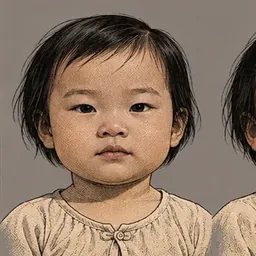
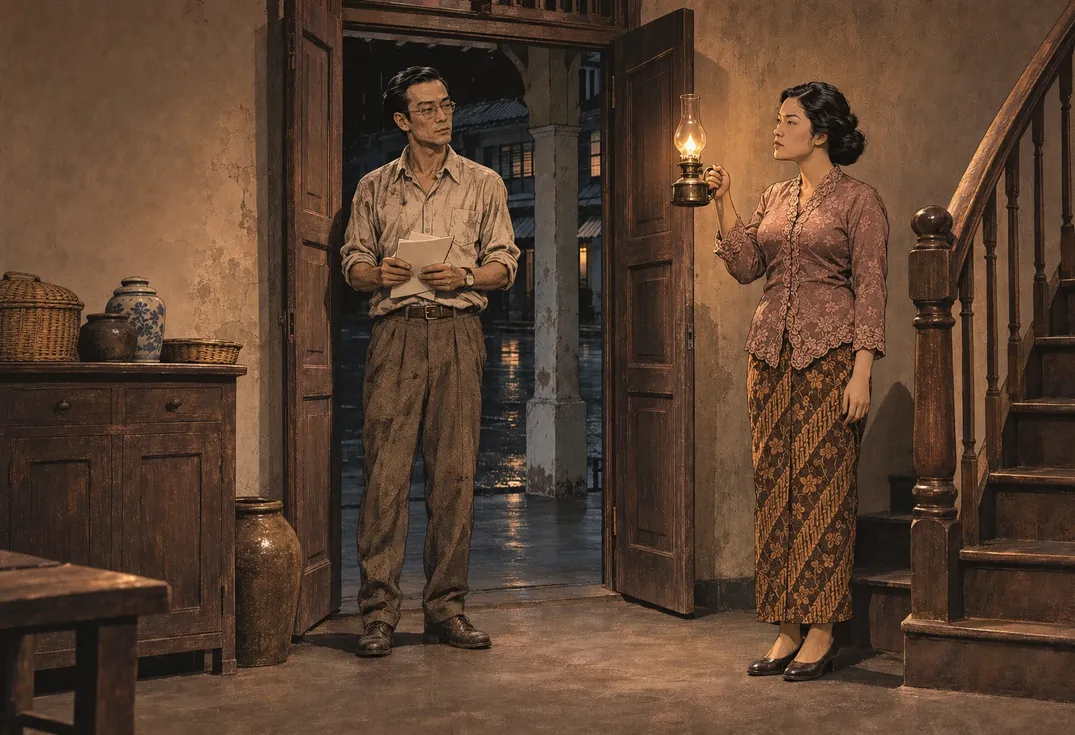
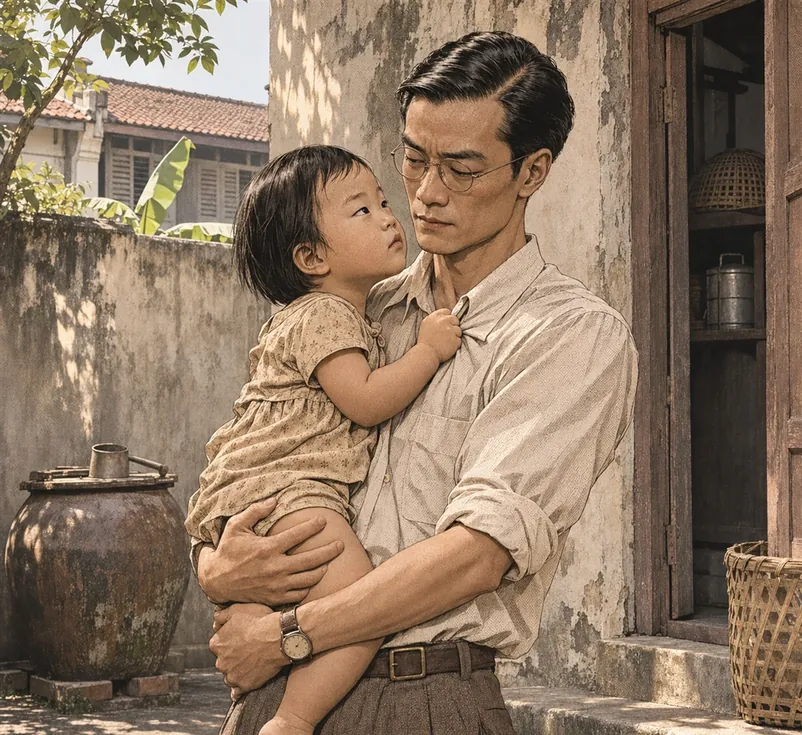
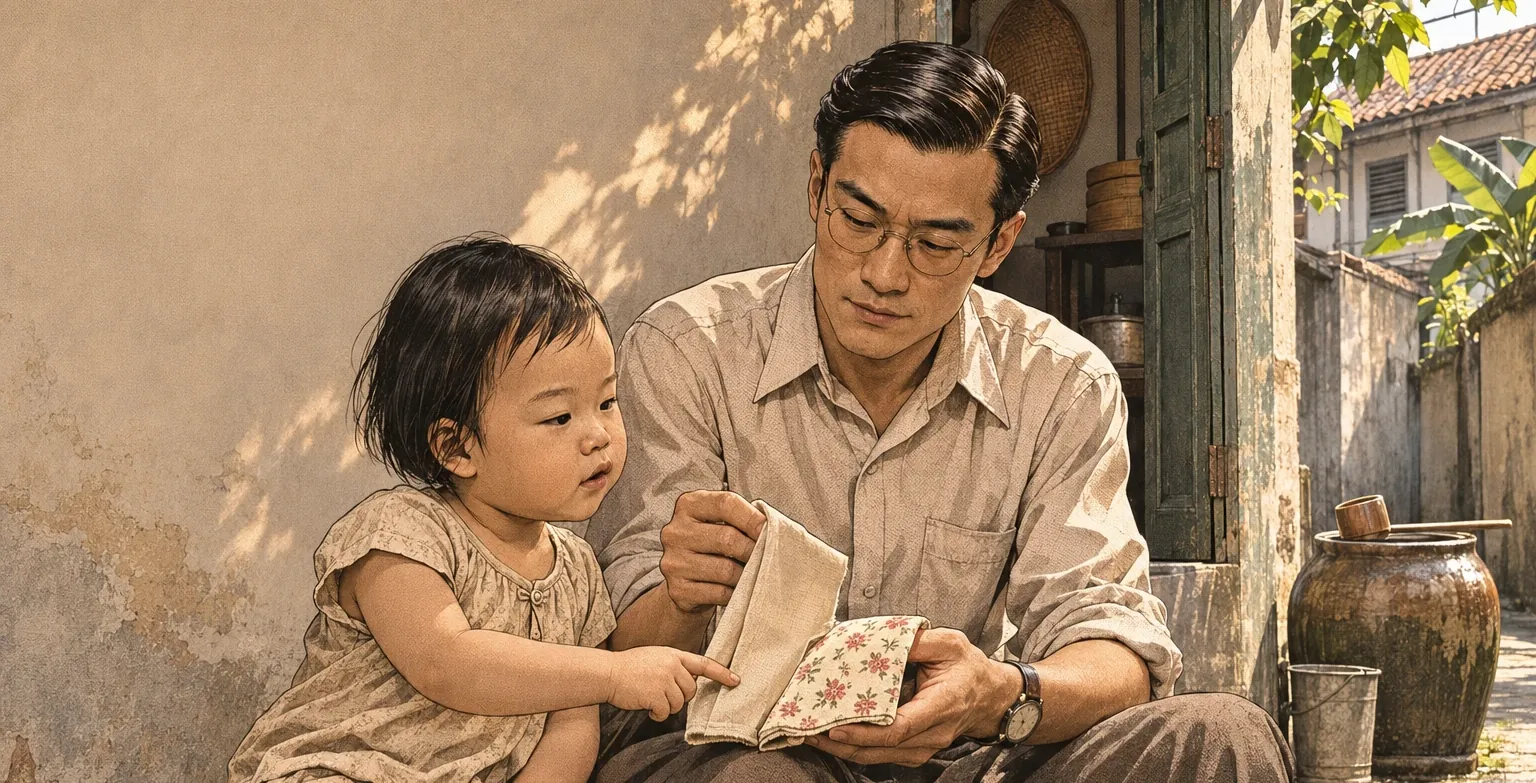
the child of the house

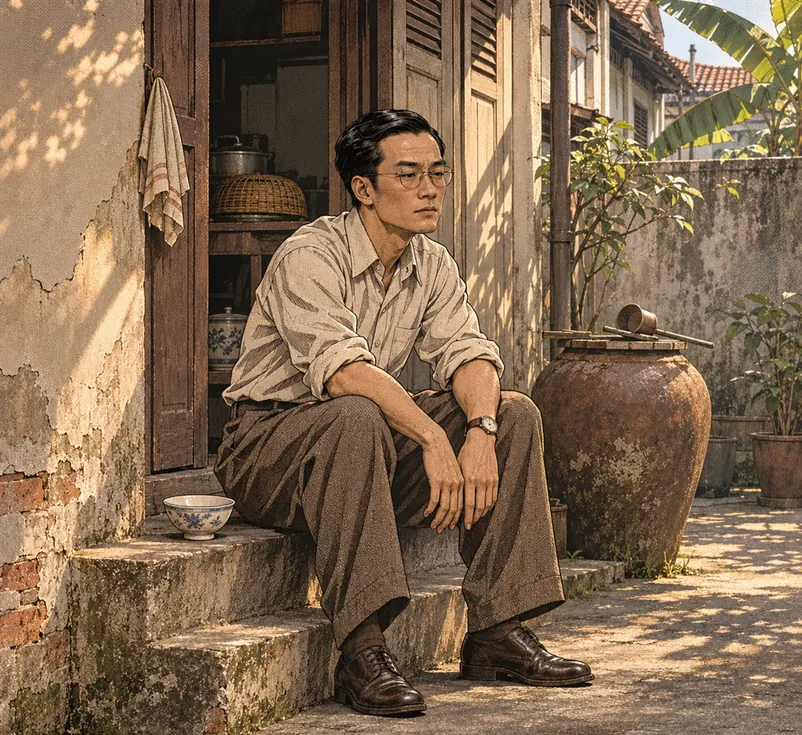
her father, a cloth merchant
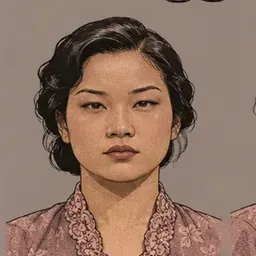
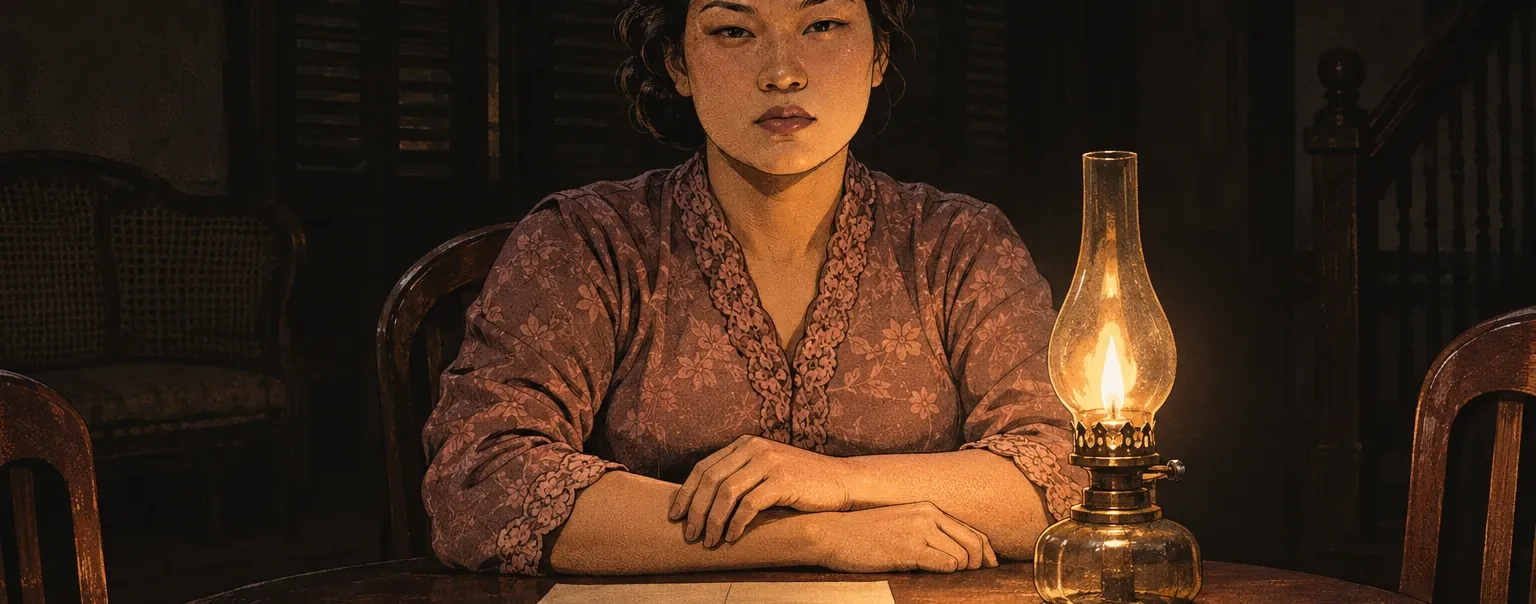
her mother
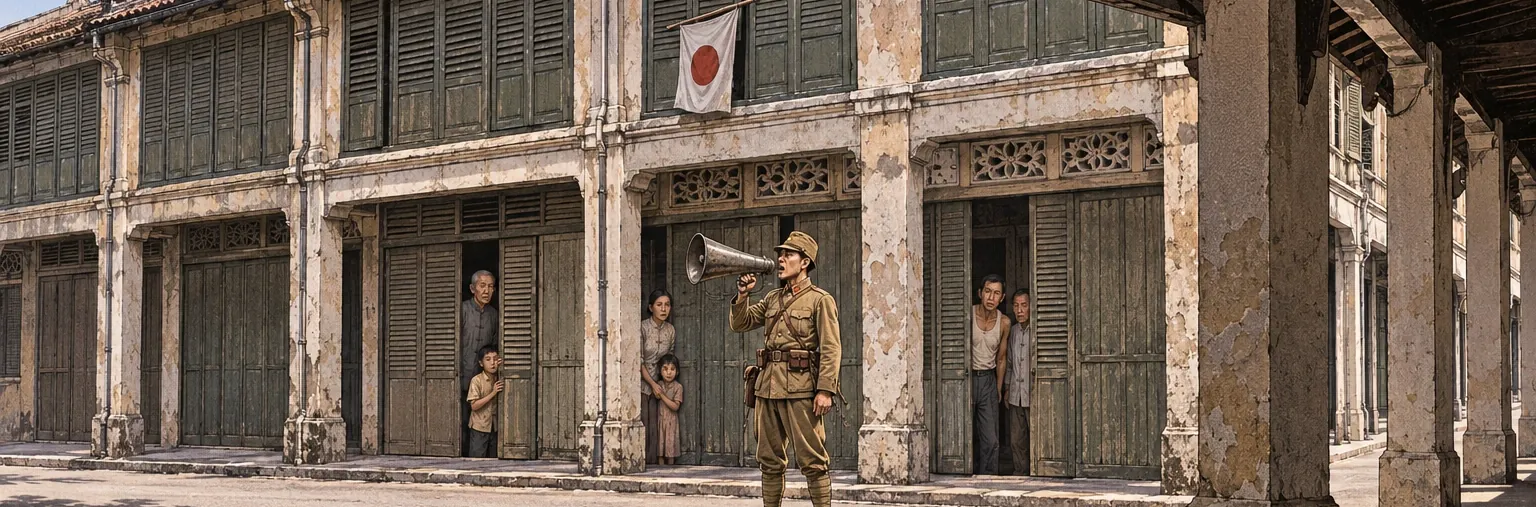
Singapore fell to Japan on 15 February 1942 after a week of bombardment and fighting. The Japanese renamed the city Syonan-to; the military administration controlled trade, food and currency.
From about 18 February to early March the Japanese military police ran the 'Sook Ching' screening of the Chinese population at assembly centres across the island. Men were examined, and those judged hostile were taken away and many were killed; counts differ widely (the Japanese gave about 5,000; Chinese community estimates run to 25,000-50,000).
The Japanese demanded a $50 million 'gift' from the Chinese community. The Overseas Chinese Association, formed under pressure in March, organised the collection; wealthy merchants were assessed individually and the sum was raised partly by a bank loan.
Trade fell under military control and licensing; stock and shipping were requisitioned; food controls and rationing began. Wages and prices are modelled by the median table (flat for 1942) with household changes declared as income factors.
Tan Cheng Huat is a 34-year-old Chinese merchant, Lim Swee Neo is 27, Mei Lin is two. Their district, premises and trade partners are not established.
Sources
- Singapore Infopedia (National Library Board): Fall of Singapore; Sook Ching massacre; Overseas Chinese Association and the $50 million contribution; Japanese Occupation of Singapore.
Behind the dice How likely was each thing that happened? (Spoilers)
Nothing in Life Story is chosen by a writer. Each person's year is a set of rolls, weighted by their stats and their times; the story is written afterwards to fit what the dice decided.
| Who | What the dice decided | Result | Chance |
|---|---|---|---|
| Tan Cheng Huat | Held for days at a screening centre, then released. | held released | 31% |
| Tan Mei Lin | Soldiers requisition the firm's stock from the godown. | requisition | 17% |
| Tan Cheng Huat | Assessed about $36,000 toward the $50 million levy; they sell what they can. | ruinous | 20% |
| Tan Cheng Huat | No real licence to trade: the firm has nothing left to sell. | no | 56% |
| Lim Swee Neo | She takes in no work; the evening mending is to keep her hands busy. | no | 83% |
| Tan Mei Lin | A quiet year as a two-year-old sees it: her father at home all day. | quiet | 42% |
| Tan Cheng Huat | Bad news: the goods are gone and the firm cannot pay. | bad news | 15% |
| Lim Swee Neo | Worrying news of a relative, which she keeps from the table. | bad news | 15% |
| Tan Mei Lin | No serious illness for Mei Lin. | no | 98% |
| Tan Mei Lin | The house keeps its rooms and help; what is sold goes to the levy. | no | 92% |
| Tan Mei Lin | Mei Lin alive at the year's end. | no | 98% |
| Tan Cheng Huat | Cheng Huat is not seriously ill. | no | 95% |
| Tan Cheng Huat | Cheng Huat survives the year, and the screening. | no | 96% |
| Lim Swee Neo | Swee Neo is not seriously ill. | no | 93% |
| Lim Swee Neo | Swee Neo alive at the year's end. | no | over 99% |
Show as a table
| Year | Household a month | Peer median | Multiple |
|---|---|---|---|
| 1941 | $504 | $42 | 12.0× |
| 1942 | $82 | $42 | 2.0× |
Nominal dollars; the engine's model estimate, the same figure as each issue's money line.
The chapter in prose
1942: The Valuation
In 1942 Singapore falls and becomes Syonan-to, and the first year of the Occupation strips the Tan family of most of what it had. Tan Cheng Huat, the Malacca-born merchant, is held for days at a Sook Ching screening centre and released. Soldiers take the stock from his firm and trade stops. The Chinese community's $50 million levy is assessed against the household at about $36,000, and the Tans pay it by selling what they can. His wife, Lim Swee Neo, carries a worry of her own. Their two-year-old daughter, Mei Lin, knows only that her father is at home all day.
The Centre
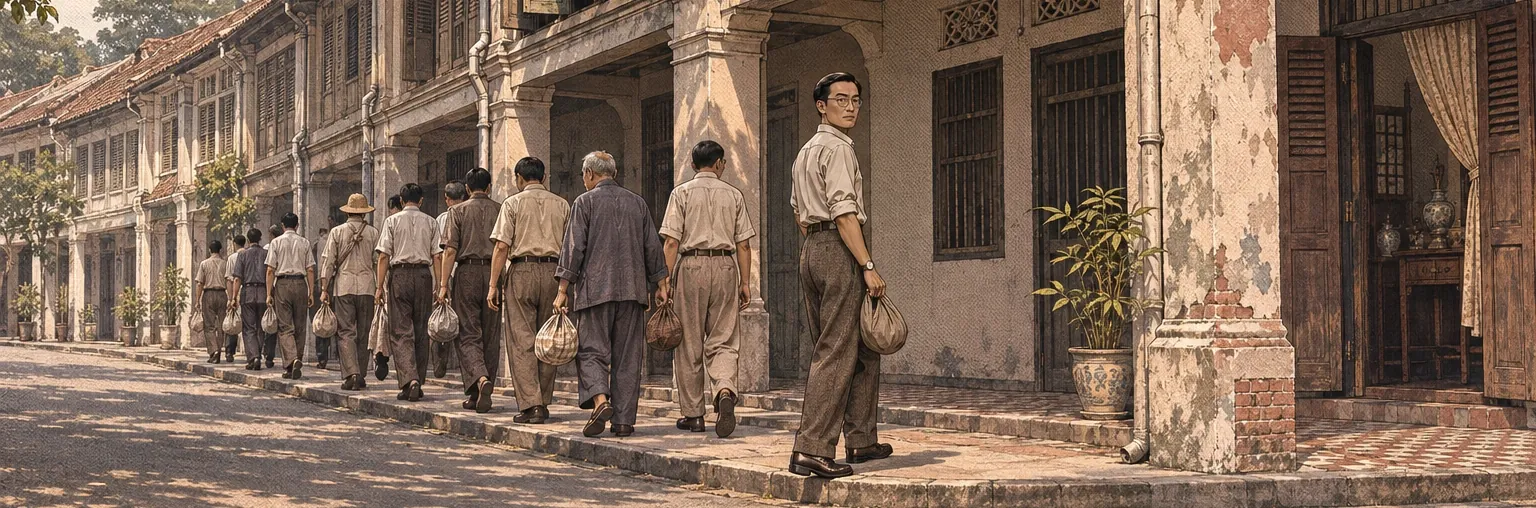
The order reached the street the way orders did that month: first from a man with a loudhailer, in a language nobody in the household spoke, and then from a neighbour who had understood it better and said it again at the door. All the men were to go to a centre. They were to bring their papers.
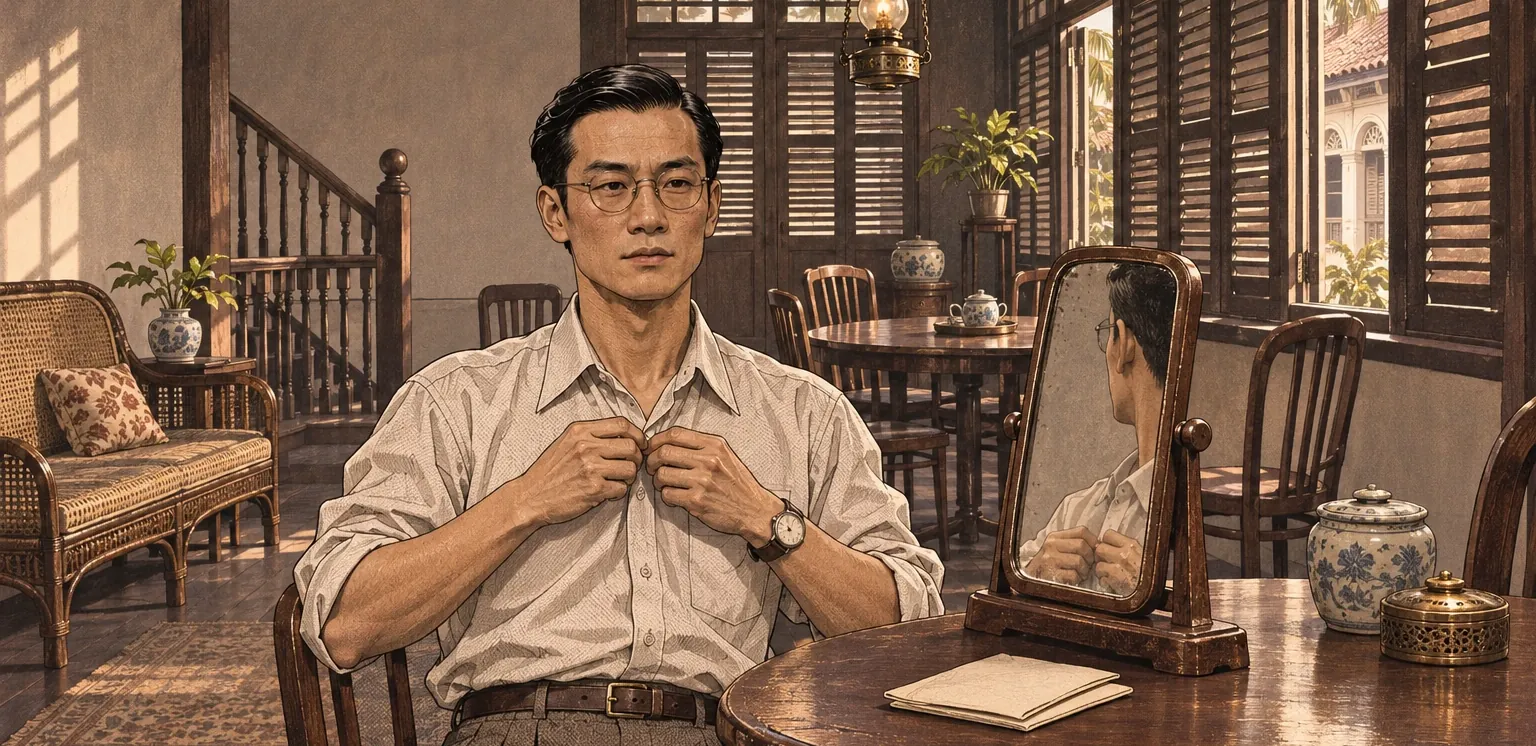
Tan Cheng Huat put on a clean shirt. He was thirty-four, and he looked, going down the street with the others, like a man on his way to a shop opening. At the corner he turned and looked back at the house once, as if to check that it was still there.
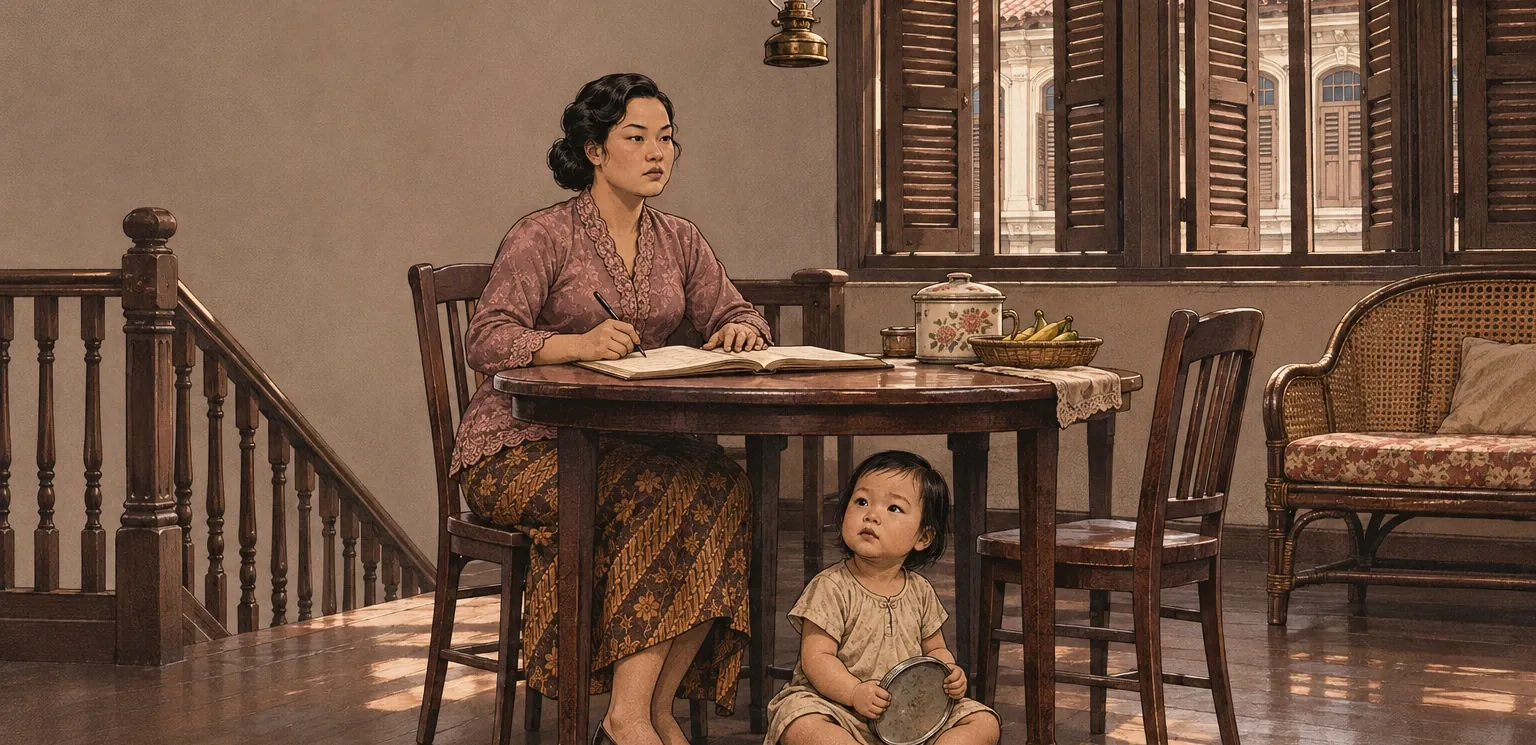
Lim Swee Neo did the household accounts that day, because she could not think what else to do with her hands. Mei Lin sat under the table with a tin lid and asked for her father twice, and was told that he was working. The second time Swee Neo had to put down the pen.
He came back after dark, on a day she had stopped counting, thinner and quiet, with the same papers in his hand. He did not say where he had slept or what had been paid, or who had spoken for him, and she did not ask in front of the child. Some of the men from the street did not come back that week, and she knew which houses they had gone out of. In the morning he ate a bowl of rice and sat on the back step with his hands between his knees.
He picked Mei Lin up before he went inside. She held onto his collar the way she held onto everything, as if it might be taken.
What the Soldiers Took
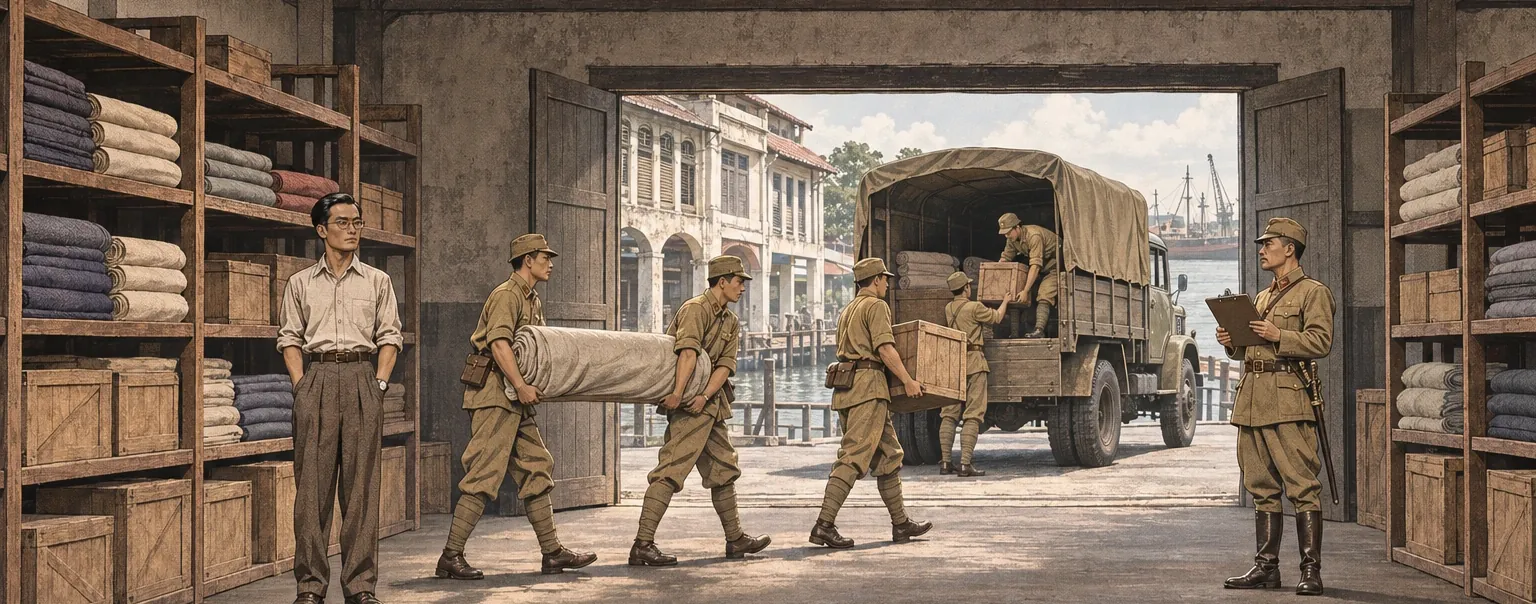
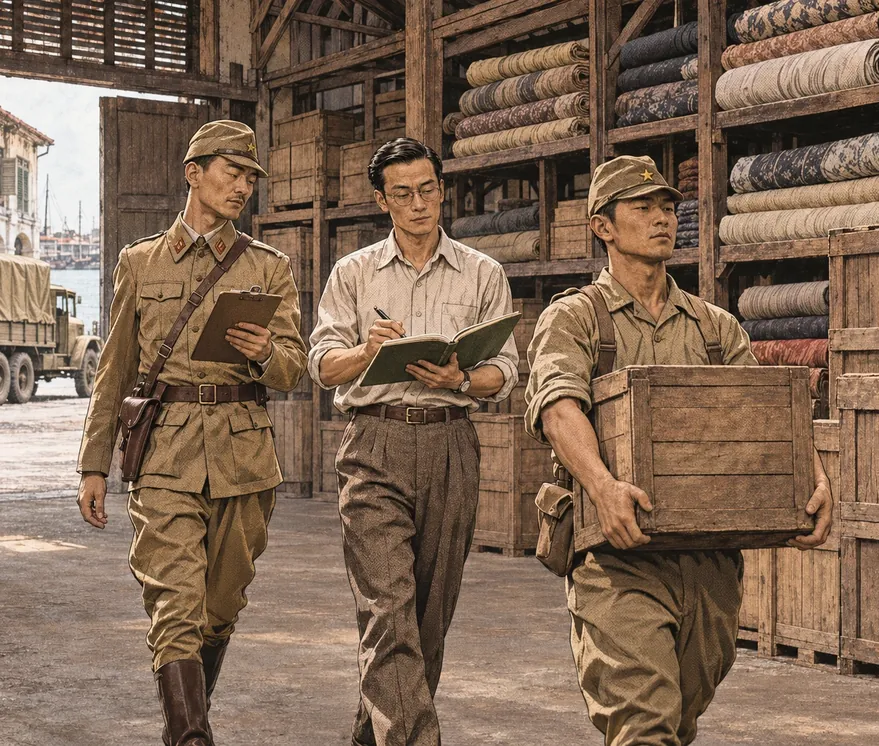
The soldiers came to the godown in a lorry, on a morning when he had unlocked it only to look. There were six of them and an officer with a clipboard, and they were not hostile; they were thorough. They took the cloth bolt by bolt, and the household goods by the crate, and they loaded the lorry until its springs sat low.
Cheng Huat followed them with his ledger. Nobody had asked him to. He wrote down each item as it went, the quantity and the description and the price he had paid, in the same hand he had used all his life, and the officer looked once at the page and then through it.
When the lorry had gone the shelves stood empty and there was a smell of camphor. He turned the page and wrote the total at the bottom, and drew a line beneath it. He had never kept a column he knew he could not collect. He wrote the date in the corner anyway and closed the shutters.
The firm had its licence to trade, in the sense that anyone had one. It had nothing to trade. From that week he was at home in the daytime, and the house, which had been planned around his absence, did not know what to do with him.
The Valuation
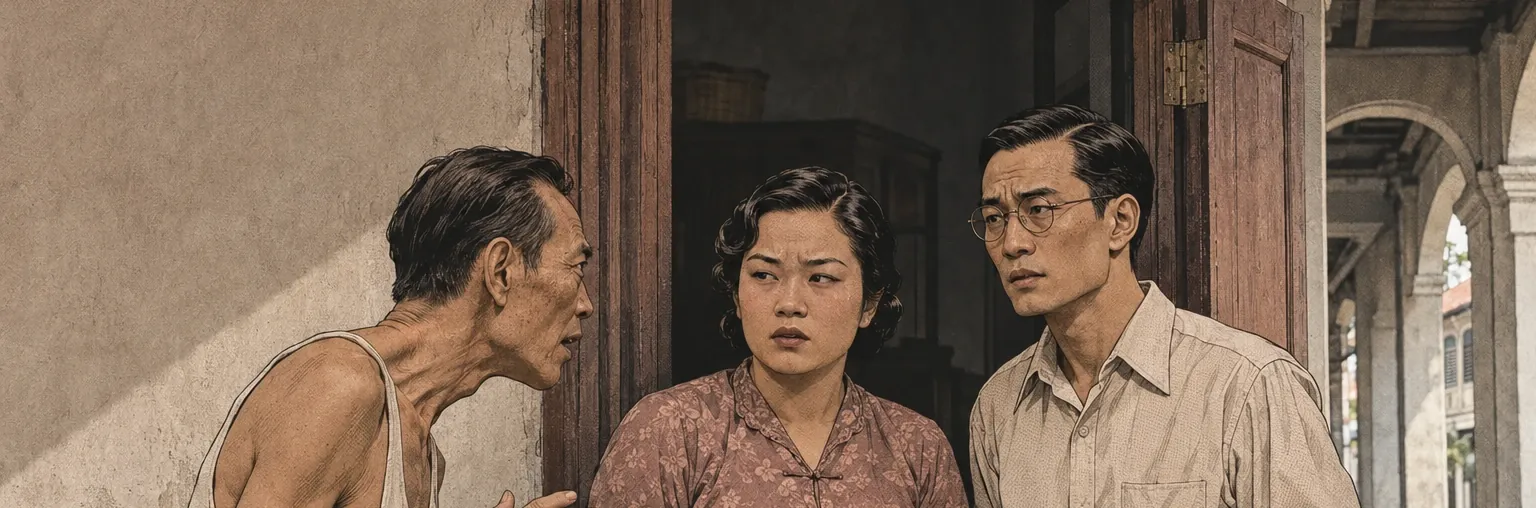
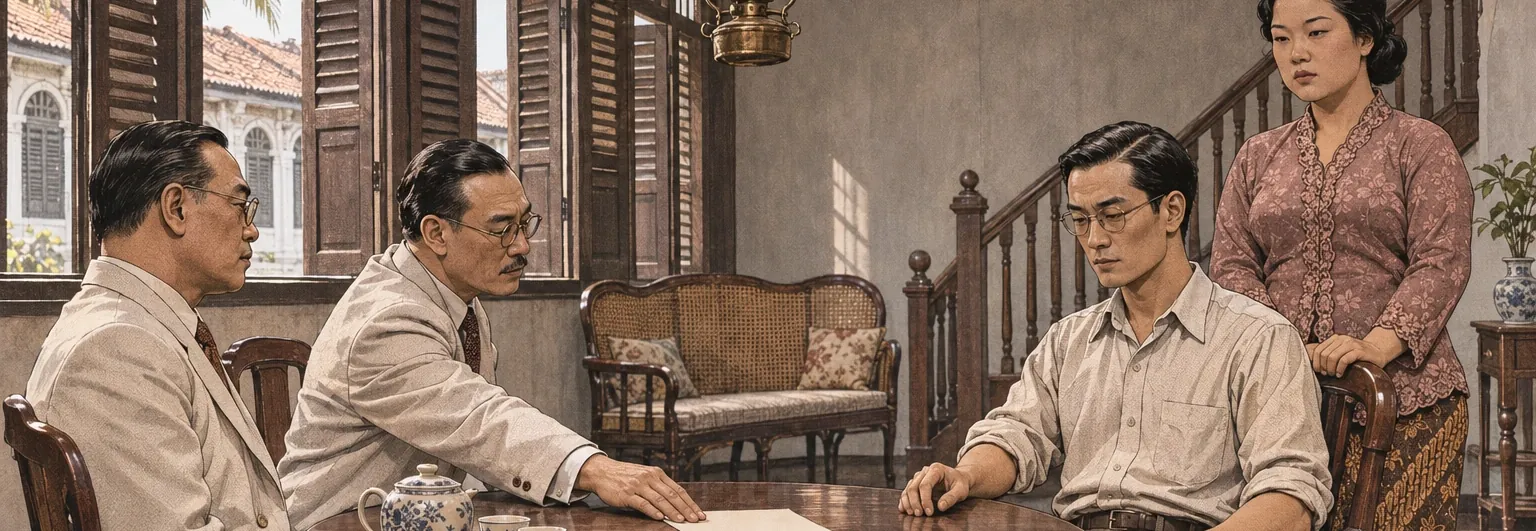
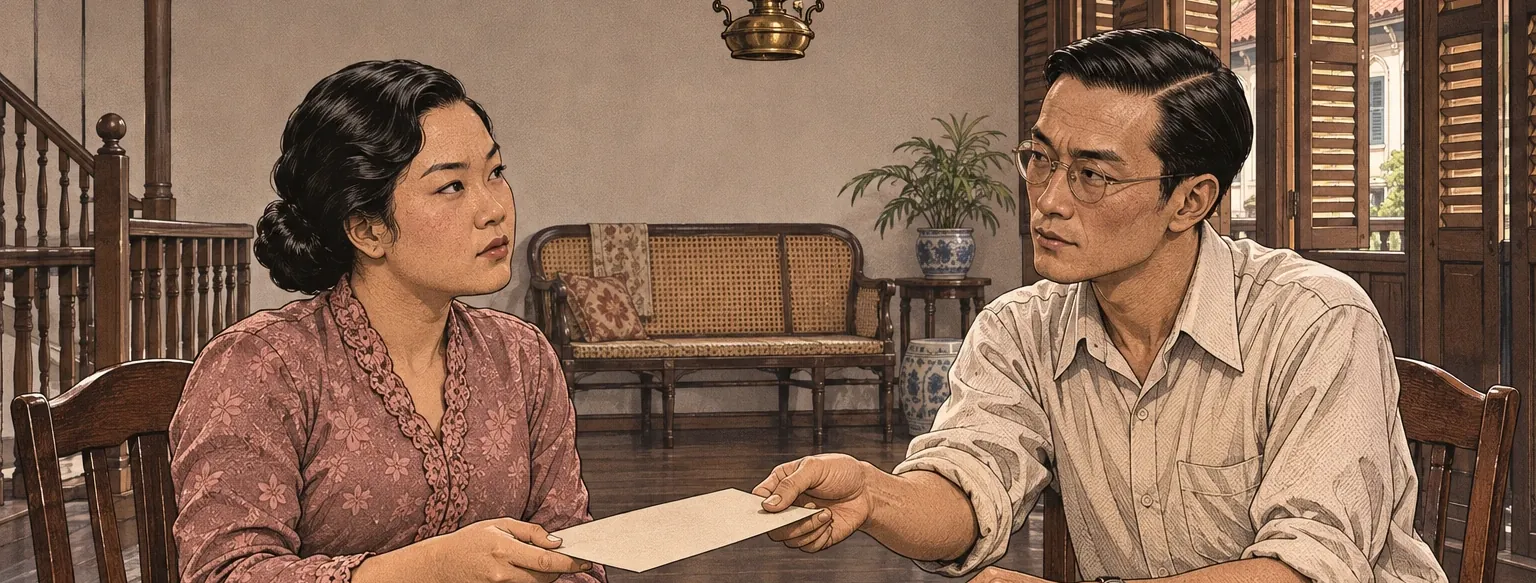
The assessment came on a sheet of paper, carried by two polite men from the Overseas Chinese Association, who said they were sorry and did not seem to be. The Japanese wanted fifty million dollars from the Chinese of Malaya. The community was to find it. Men of means were to be told what their share was.
Cheng Huat's was thirty-six thousand dollars. It was about six years of what the household had lived on before the war. He read the figure twice and passed the paper across the table.
"We don't have it," Swee Neo said.
"No."
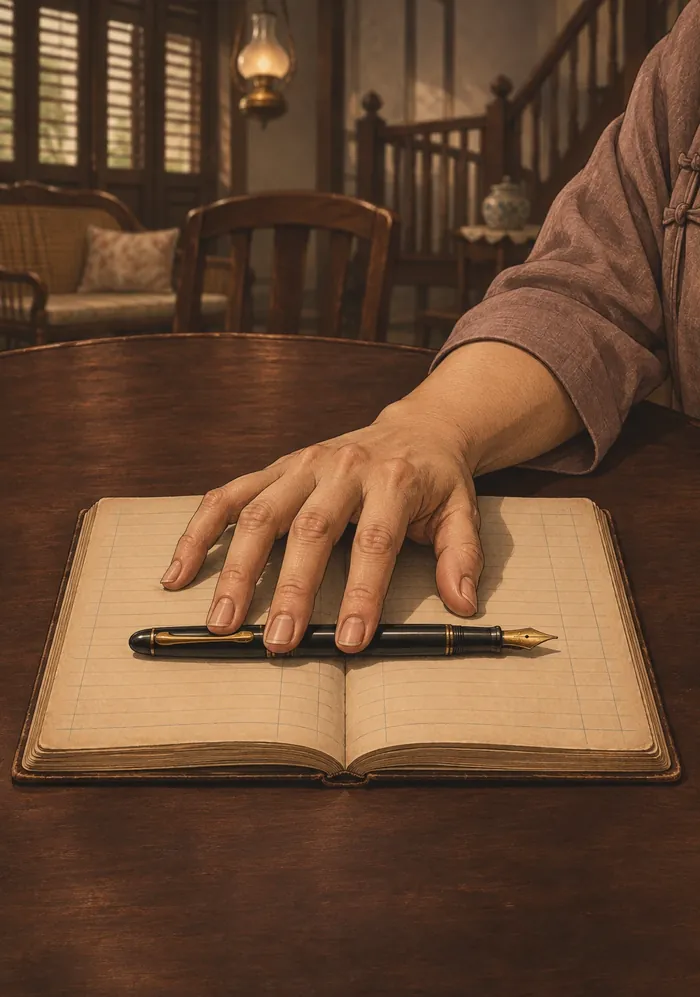
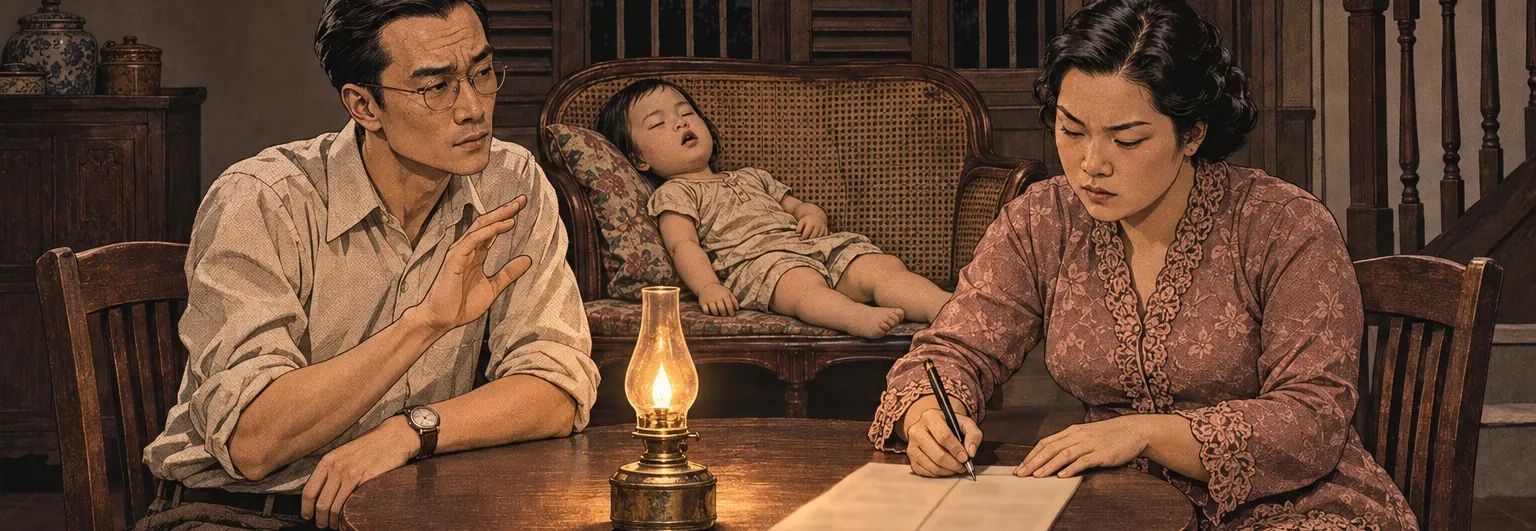
The stock was gone and the firm could not pay. So they sold what could be sold: they sat at the table in the evenings with the lamp between them and drew up a list, in two columns, of what the house could do without and what it could not. The second column was shorter than either had expected. Swee Neo wrote the figures. When he hesitated over an item she did not look up.
She had had word that week of a relative's trouble, bad enough that she did not describe it at the table, and she did not describe it while the list was being drawn. Mei Lin was asleep on the settee with her mouth open. The sums did not come out even. They found the rest by the end of the month, somehow, and neither of them spoke of how.
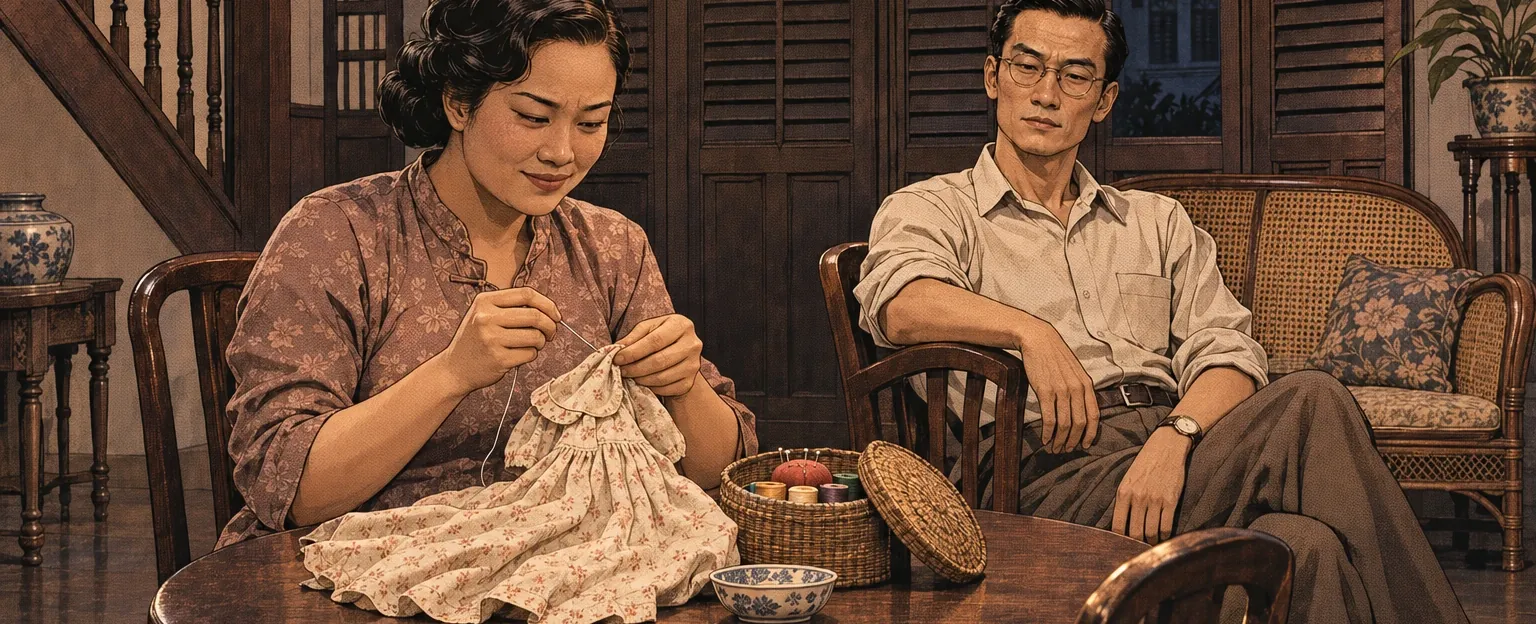
She kept a little of her mending, now, for the evenings. It was not to earn money. She said it was to keep her hands occupied. He pretended to believe her.
Papa at Home
For Mei Lin it was a year of her father.
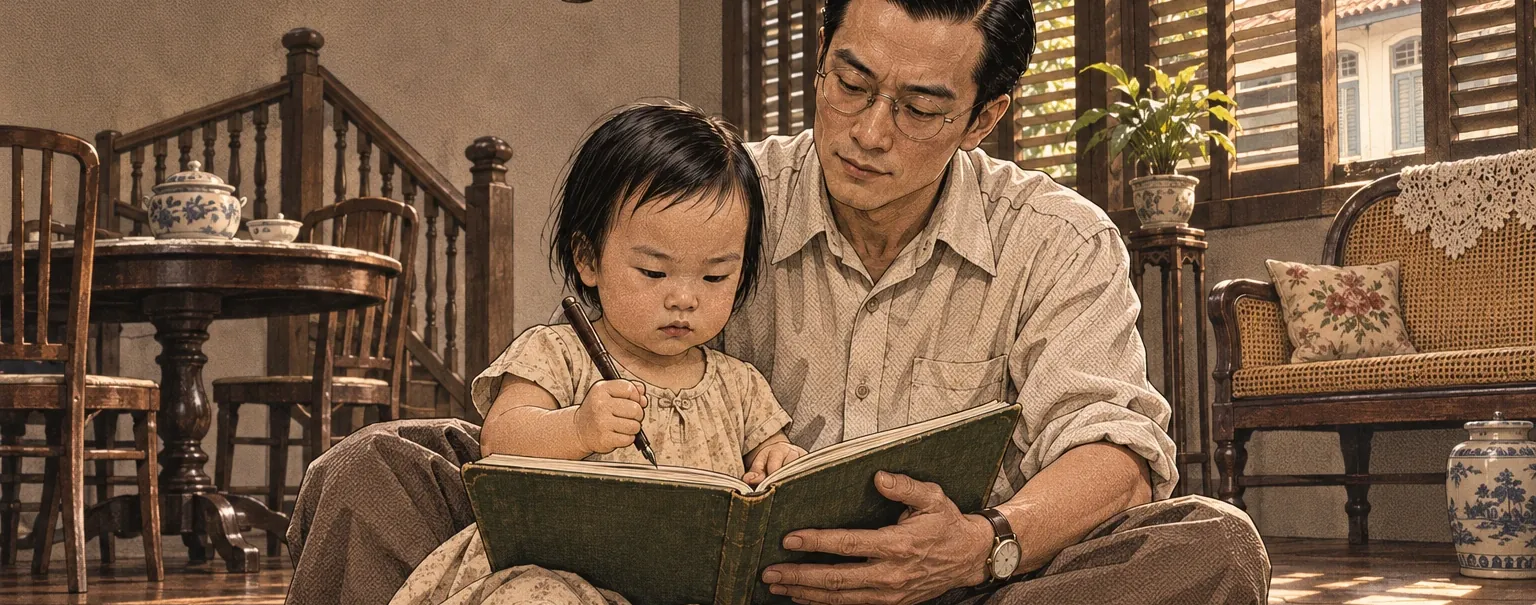
He was at home in the mornings, which he never had been before. He sat on the floor with her, and showed her how a ledger opened and shut, and let her hold the pen without any ink in it. In the afternoons he took her to the back step, where the sun came in, and told her the names of the cloths he used to sell: the thick ones, the thin ones, the one with the little flowers.
She did not know what the soldiers were, or the lorry, or the paper on the table. She knew that there were more people talking quietly than before, and that her mother's face went still when a knock came at the door. She knew the lamp was lit at night and not in the day. She thought, if she thought about it at all, that this was how a house was supposed to be: everyone in it, all day.
That night Swee Neo carried the lamp to the table, set it down beside the list, and for the first time in the year did not say what was on her mind.