In 1964 race riots break out in Singapore in July and again in September, and the island is put under curfew. Mei Lin, 24, is made senior clerk at the shipping agency, with a junior clerk under her at last. Kah Leong's father gives him more of the rice business, and with it a dealer's debt that goes bad; Kah Leong asks Mei Lin for a loan from her own money, and her father quietly lends the rest. A notice on the block puts their street's future in question. By the end of the year she is expecting their first child, due in 1965. At the Tan house the firm grows for the first time in five years, the curfews cost it little, and Lim Swee Neo wins a seventh account and sees a private doctor about her cough. Nobody is seriously ill.

senior clerk at a shipping agency
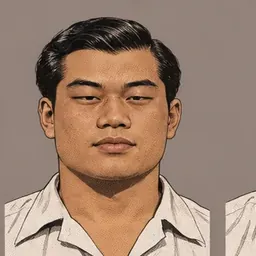
her husband, in his father's rice business
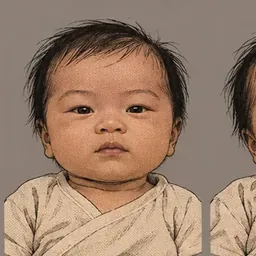
their daughter, born this year
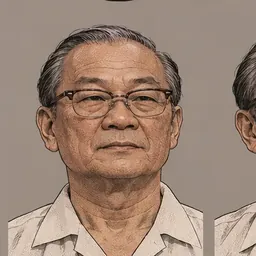
her father, cloth merchant
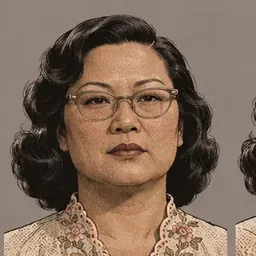
her mother
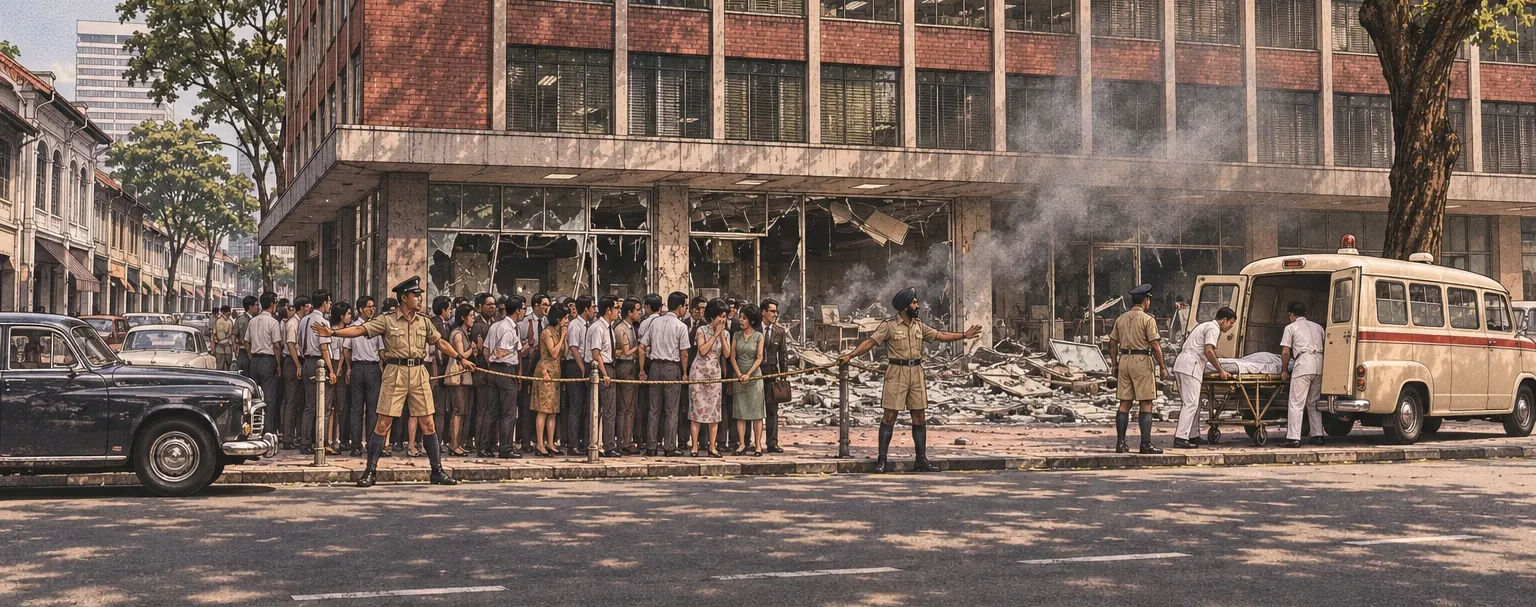
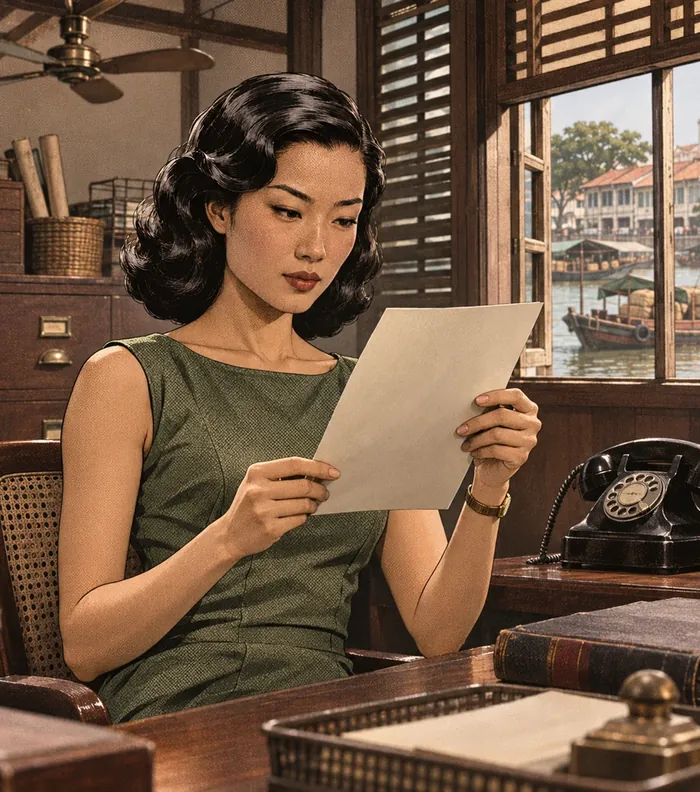
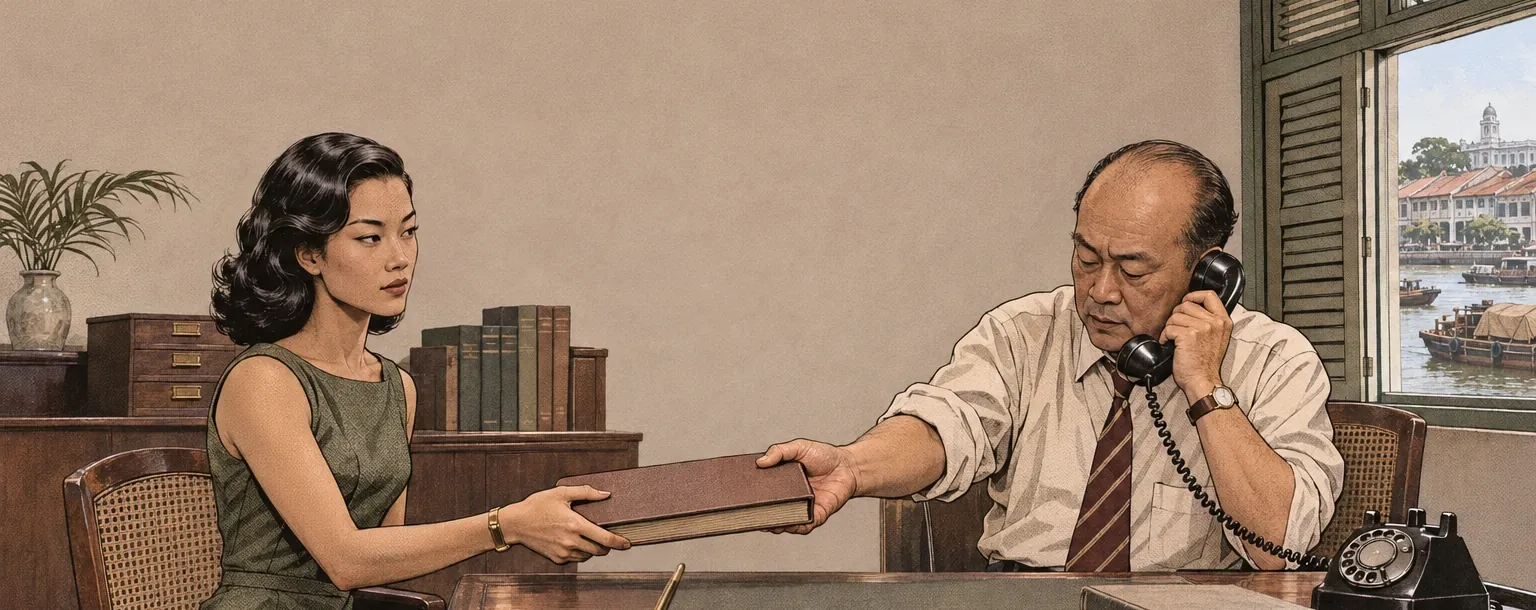
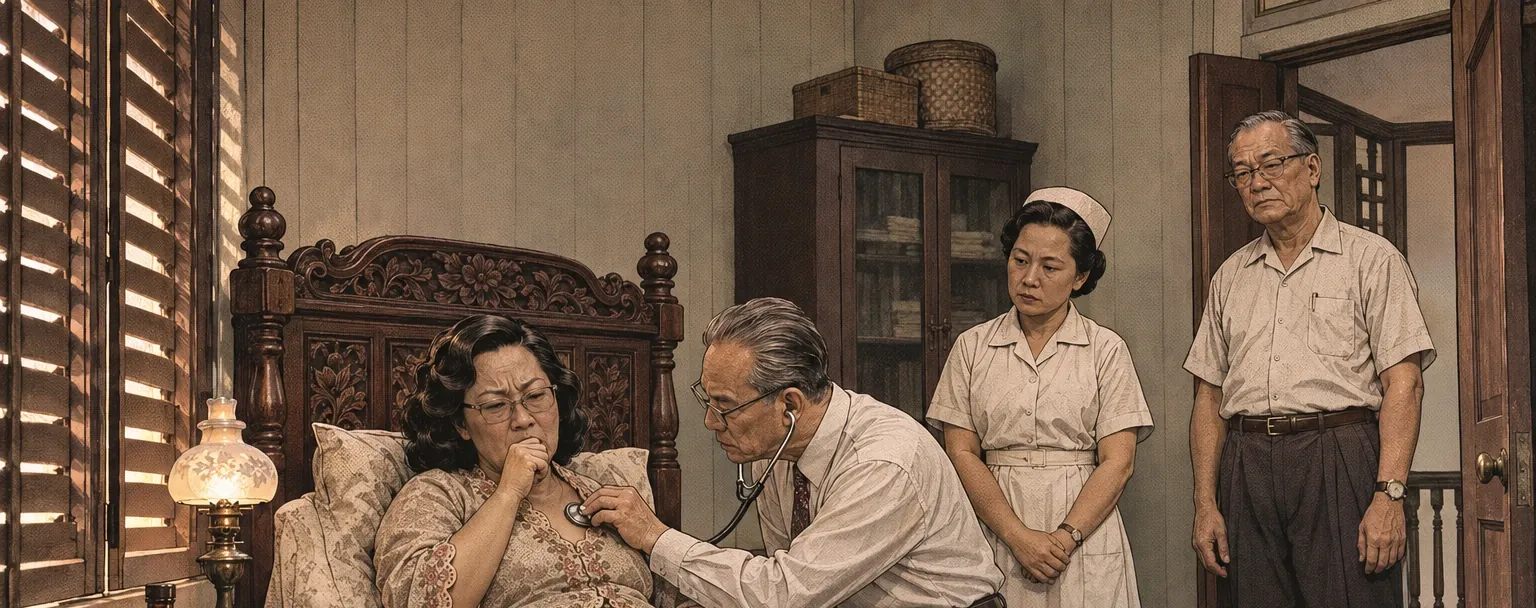
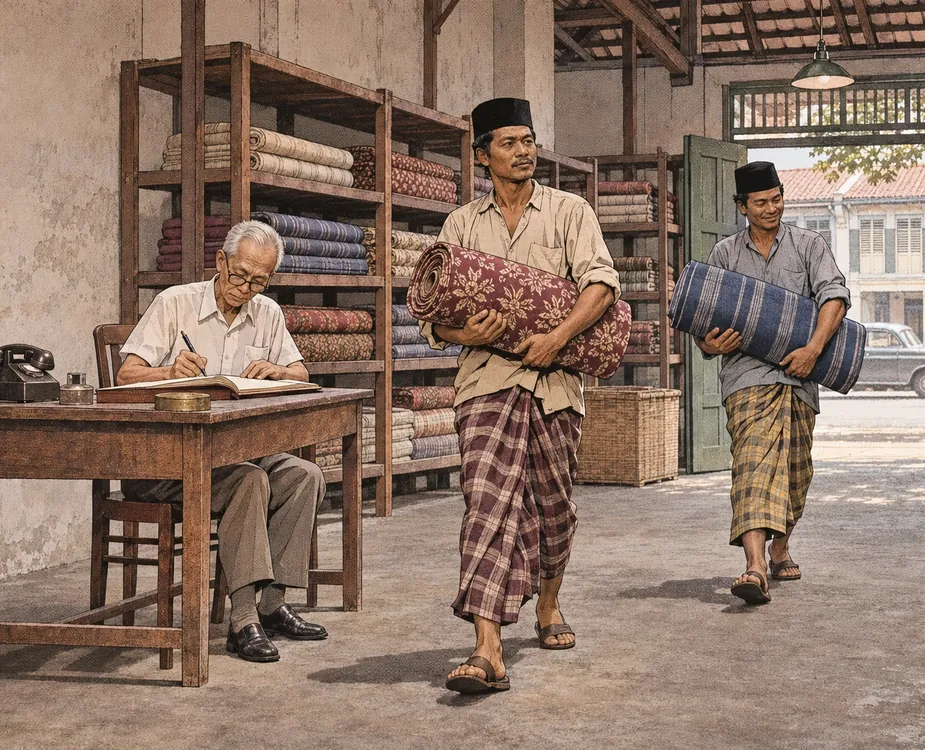
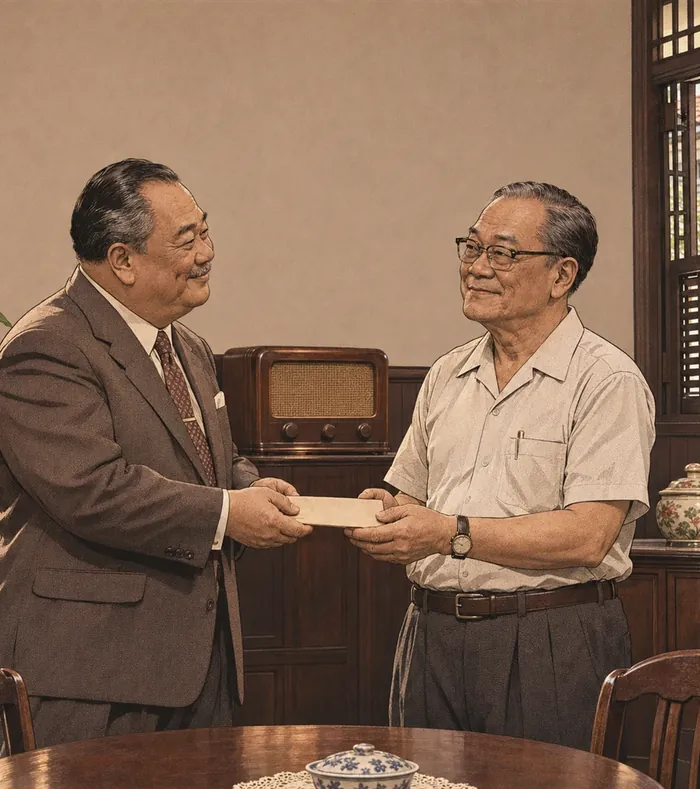
Confrontation with Indonesia continues. At 3.07 pm on 10 March a bomb planted by Indonesian marine commandos goes off in MacDonald House, an office block on Orchard Road; two people die at once and a third two days later, and 33 are injured. The two commandos, Harun bin Said and Osman bin Haji Mohamed Ali, are convicted of murder in October and sentenced to death.
On the morning of 9 August Singapore leaves Malaysia and becomes an independent, sovereign state, announced in Singapore and Kuala Lumpur at the same time. At a televised press conference Lee Kuan Yew calls it 'a moment of anguish' and breaks down.
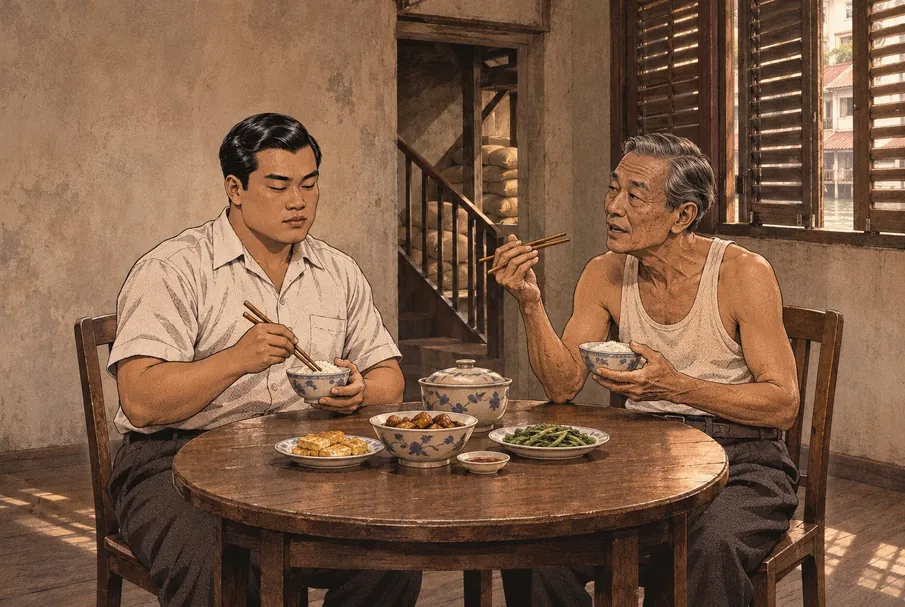
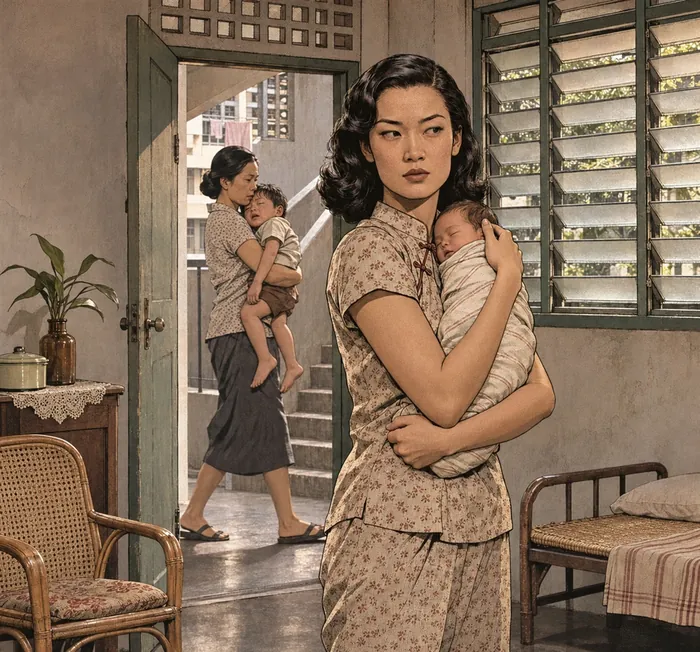
Mei Lin is 25, senior clerk at a shipping agency, married since November 1961 to Teo Kah Leong (31), in his father's rice business at Boat Quay. She has been expecting since October 1964; the baby is due this year. Tan Cheng Huat is 57 and Lim Swee Neo is 50. Median household income for the peer group is about $245 a month.
Sources
- Infopedia (NLB), 'MacDonald House bomb explosion' (SIP_62); Wikipedia, 'MacDonald House bombing'.
- Infopedia (NLB), 'Separation of Singapore from Malaysia' (SIP_2020-08-03_151233); remembering.gov.sg, 'Singapore is out'.
- BiblioAsia (NLB), 'Konfrontasi: Singapore's Experience of an Undeclared War'.
- Singapore Department of Statistics, Statistics Singapore Newsletter on infant mortality: 34.9 infant and 17.7 neonatal deaths per 1,000 live births in 1960.
Behind the dice How likely was each thing that happened? (Spoilers)
Nothing in Life Story is chosen by a writer. Each person's year is a set of rolls, weighted by their stats and their times; the story is written afterwards to fit what the dice decided.
| Who | What the dice decided | Result | Chance |
|---|---|---|---|
| Tan Mei Lin | A girl: Rose Teo Li Ling. | girl | 48% |
| Tan Mei Lin | The Sunday conversation: they speak to each other like people sharing a lift. | yes | 20% |
| Tan Mei Lin | Her old bank manager gives a Hong Kong trading house her name. | introduction | 15% |
| Tan Mei Lin | By October the Hong Kong freight comes through every fortnight; she sees to it. | yes | 67% |
| Lim Swee Neo | Swee Neo in bed for weeks, the doctor every second morning, a nurse at night; no name given. | yes | 4% |
| Teo Kah Leong | He sleeps in the front room and eats at his parents': they drift. | drift | 4% |
| Tan Mei Lin | She goes back to the shipping office; an amah minds the baby. | back amah | 42% |
| Tan Mei Lin | Her employer puts the new Hong Kong account in her hands. | yes | 60% |
| Tan Mei Lin | While she is away there is talk of cuts at the agency. | cutback scare | 4% |
| Tan Mei Lin | The cuts fall on the godown side, not on her office. | no | 89% |
| Tan Mei Lin | A thief comes through the door left on the latch: his watch and a pair of her shoes. | petty theft | 4% |
| Tan Mei Lin | Still a steady year between them: she hands him the baby and he learns to hold her. | close | 55% |
| Tan Mei Lin | A fever goes round the block's children; Rose kept indoors for a month. | community illness | 4% |
| Tan Cheng Huat | The firm holds steady without growing. | no | 60% |
| Tan Cheng Huat | Every evening he comes to the flat with news of her mother. | kindness | 6% |
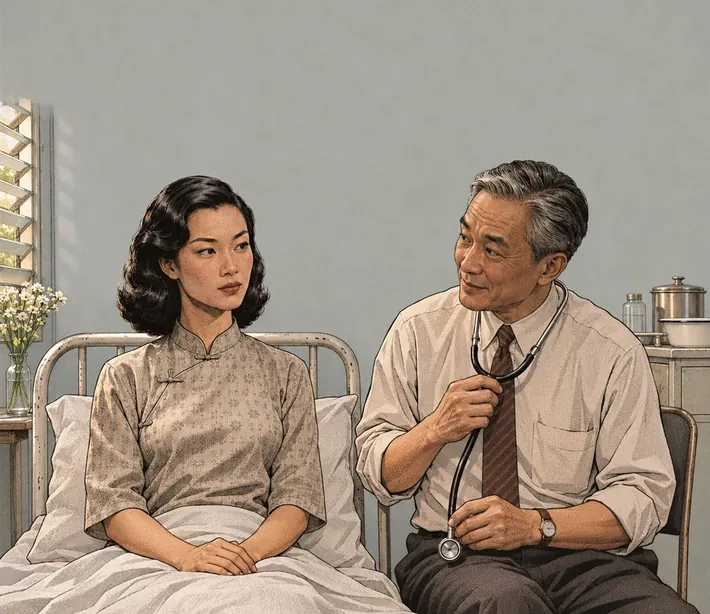
| Tan Cheng Huat | The Orchard Road doctor listens to his chest on the landing: sleep in the afternoons. | good doctor | 15% |
| Lim Swee Neo | No new account while she is ill; the clerk keeps hers. | no | 59% |
| Lim Swee Neo | When the bank is slow, her elder brother lends again on easy terms. | kin loan | 13% |
| Teo Kah Leong | His father keeps him to the dealers he has. | no | 86% |
| Tan Cheng Huat | No customer fails to pay. | no | 87% |
| Tan Cheng Huat | The Riau traders still come for their cloth. | no | 86% |
| Teo Kah Leong | None of last year's loan comes back. | no | 60% |
| Tan Mei Lin | The stairwell notice fades; nobody comes to say what it meant. | nothing | 45% |
| Tan Mei Lin | Mei Lin is well after the birth; the doctor says so twice. | no | over 99% |
| Tan Mei Lin | Mei Lin is not seriously ill this year. | no | over 99% |
| Tan Mei Lin | No pinch on the couple's budget. | no | 91% |
| Tan Mei Lin | No better post: she stays senior clerk. | stays | over 99% |
| Tan Mei Lin | Mei Lin alive at the year's end. | no | over 99% |
| Tan Cheng Huat | Cheng Huat is not seriously ill. | no | 97% |
| Tan Cheng Huat | Cheng Huat alive at the year's end. | no | over 99% |
| Lim Swee Neo | Swee Neo alive at the year's end. | no | over 99% |
| Lim Swee Neo | Otherwise an ordinary year for her. | quiet | 42% |
| Teo Kah Leong | Kah Leong is not seriously ill. | no | 95% |
| Teo Kah Leong | Kah Leong alive at the year's end. | no | over 99% |
| Teo Kah Leong | His mother's doctor gives him a tonic for a cough. | good doctor | 9% |
Show as a table
| Year | Household a month | Peer median | Multiple |
|---|---|---|---|
| 1941 | $504 | $42 | 12.0× |
| 1942 | $82 | $42 | 2.0× |
| 1943 | $148 | $42 | 3.5× |
| 1944 | $204 | $42 | 4.9× |
| 1945 | $815 | $120 | 6.8× |
| 1946 | $1,114 | $150 | 7.4× |
| 1947 | $1,094 | $155 | 7.1× |
| 1948 | $1,072 | $160 | 6.7× |
| 1949 | $1,051 | $165 | 6.4× |
| 1950 | $1,691 | $170 | 9.9× |
| 1951 | $1,753 | $175 | 10.0× |
| 1952 | $1,901 | $180 | 10.6× |
| 1953 | $1,841 | $185 | 10.0× |
| 1954 | $1,791 | $190 | 9.4× |
| 1955 | $1,838 | $195 | 9.4× |
| 1956 | $2,083 | $200 | 10.4× |
| 1957 | $2,298 | $205 | 11.2× |
| 1958 | $2,390 | $210 | 11.4× |
| 1959 | $2,841 | $215 | 13.2× |
| 1960 | $3,164 | $220 | 14.4× |
| 1961 | $2,000 | $225 | 8.9× |
| 1962 | $2,401 | $230 | 10.4× |
| 1963 | $2,453 | $235 | 10.4× |
| 1964 | $2,418 | $240 | 10.1× |
| 1965 | $2,515 | $245 | 10.3× |
Nominal dollars; the engine's model estimate, the same figure as each issue's money line.
The chapter in prose
1965: Rose
In 1965 Indonesian commandos bomb an office block on Orchard Road in March, and in August Singapore leaves Malaysia and becomes a country of its own. Tan Mei Lin, 25, senior clerk at a shipping agency and married since 1961 to Teo Kah Leong of a Boat Quay rice family, gives birth to their first child, a daughter, Rose Teo Li Ling. After her confinement she goes back to the office and takes on an amah to mind the baby, and an introduction from her old bank manager brings the agency a new account. Her mother, Lim Swee Neo, is seriously ill for weeks; her father, Tan Cheng Huat, keeps the cloth firm steady and comes to the flat every evening with news. Kah Leong, kept by his father to the dealers he already has, pays back nothing of last year's loan, and husband and wife find they talk less.
The Year of the Separation
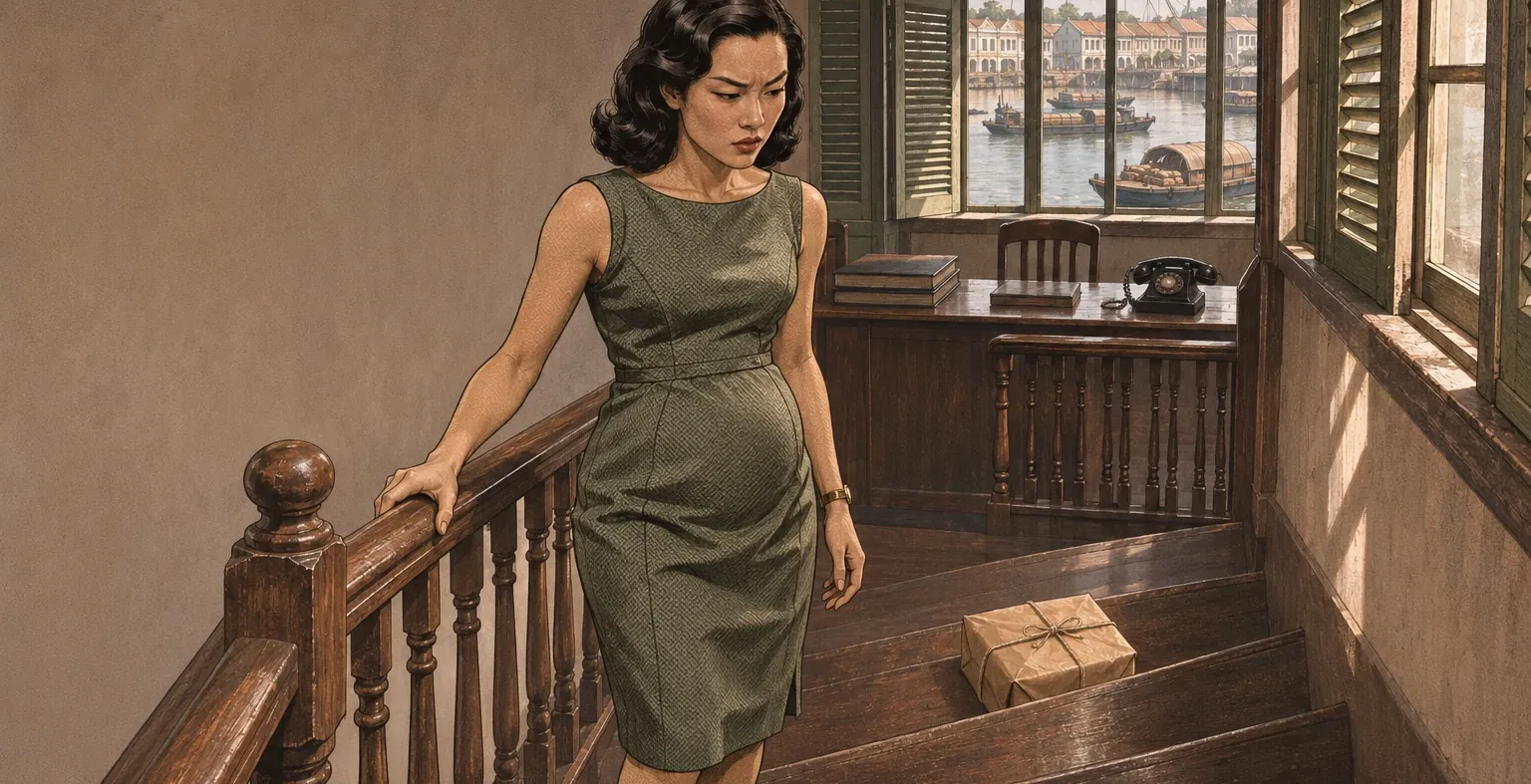
At seven minutes past three on the tenth of March a bomb went off in MacDonald House, an office block on Orchard Road. Two people died at once and a third two days later; thirty-three were hurt. The men who planted it were Indonesian marines, and the trial in October was in all the papers. Confrontation was in its third year, and people had learned to look at a parcel left on a staircase.
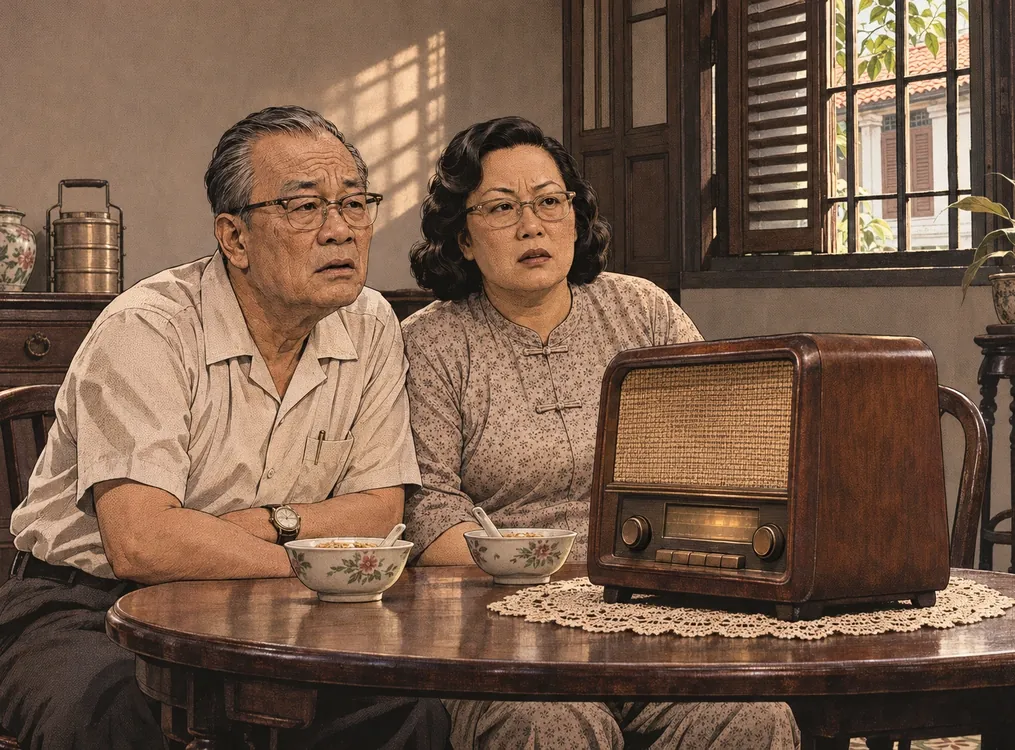
On the morning of the ninth of August the wireless said that Singapore was no longer part of Malaysia. By the afternoon it was a country of its own, and the Prime Minister wept on television, calling it a moment of anguish. In the Tan house and in the flat, people listened, talked about it at dinner, and went to work the next day.
Rose
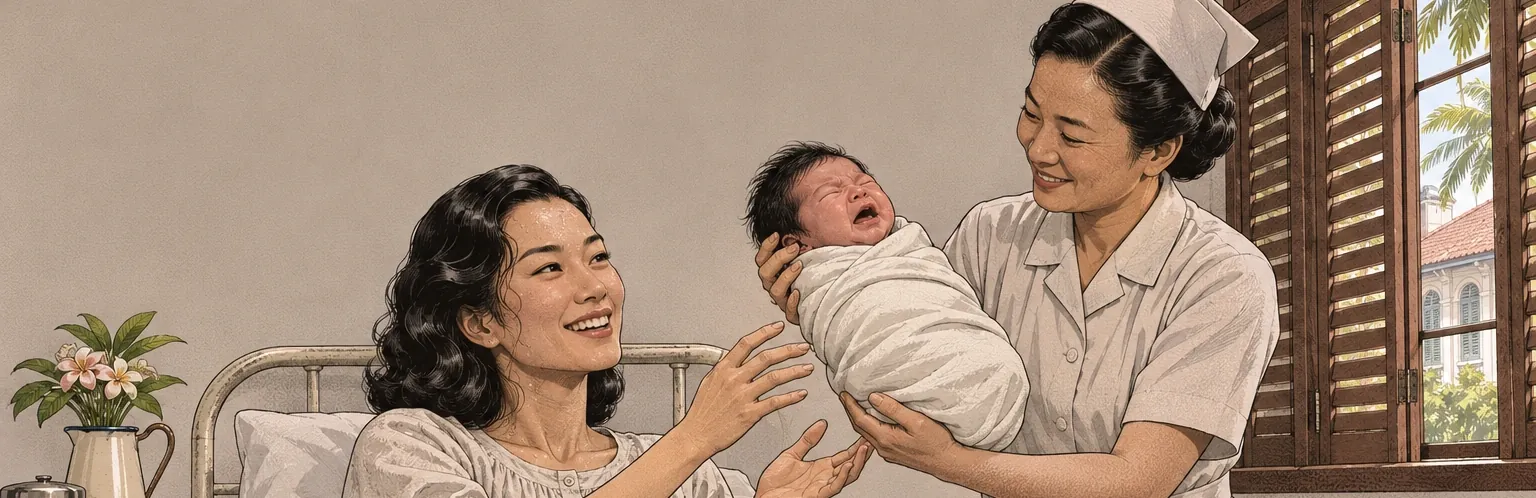
The labour was long and the maternity home was cold, the way the expensive places were cold, and at the end of it the nurse held up a girl with a great deal of black hair and a voice like a door with a bad hinge.
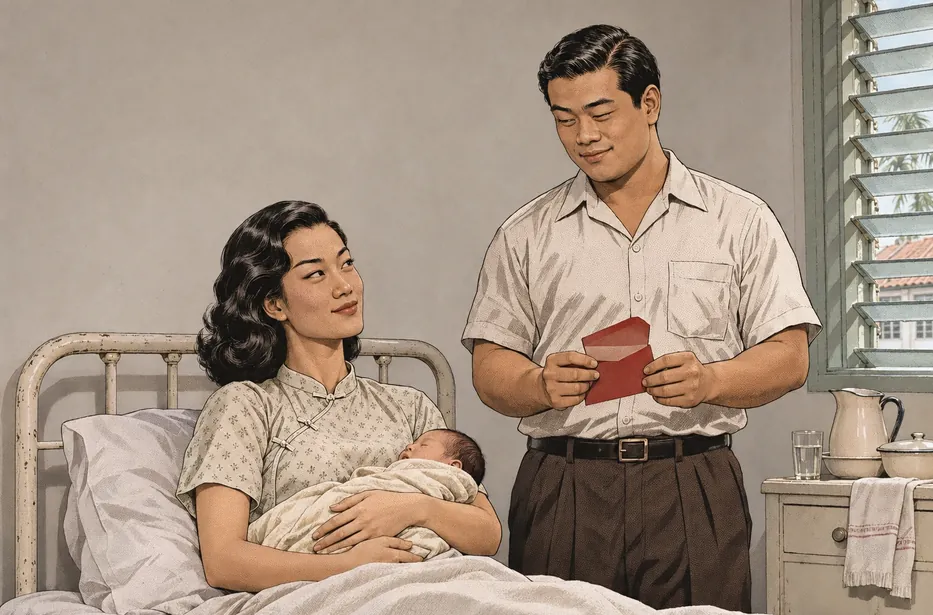
Mei Lin had chosen the English name months before, from a book, and told nobody. Kah Leong's father had sent the Chinese name in an envelope by his driver: Li Ling. When she said Rose aloud for the first time, Kah Leong repeated it carefully, as he did with English words he meant to keep.
"Rose Teo Li Ling," he said. "It's long."
"She'll grow into it."
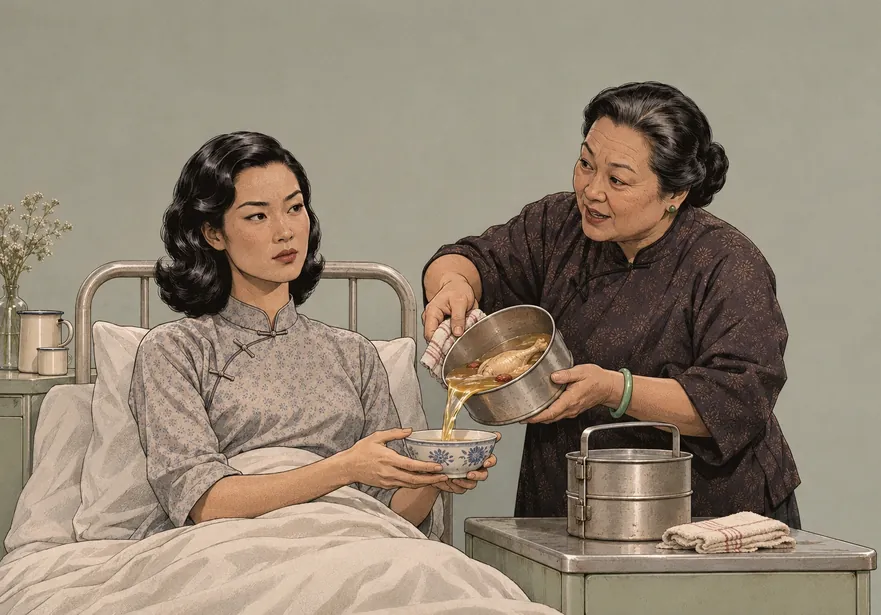
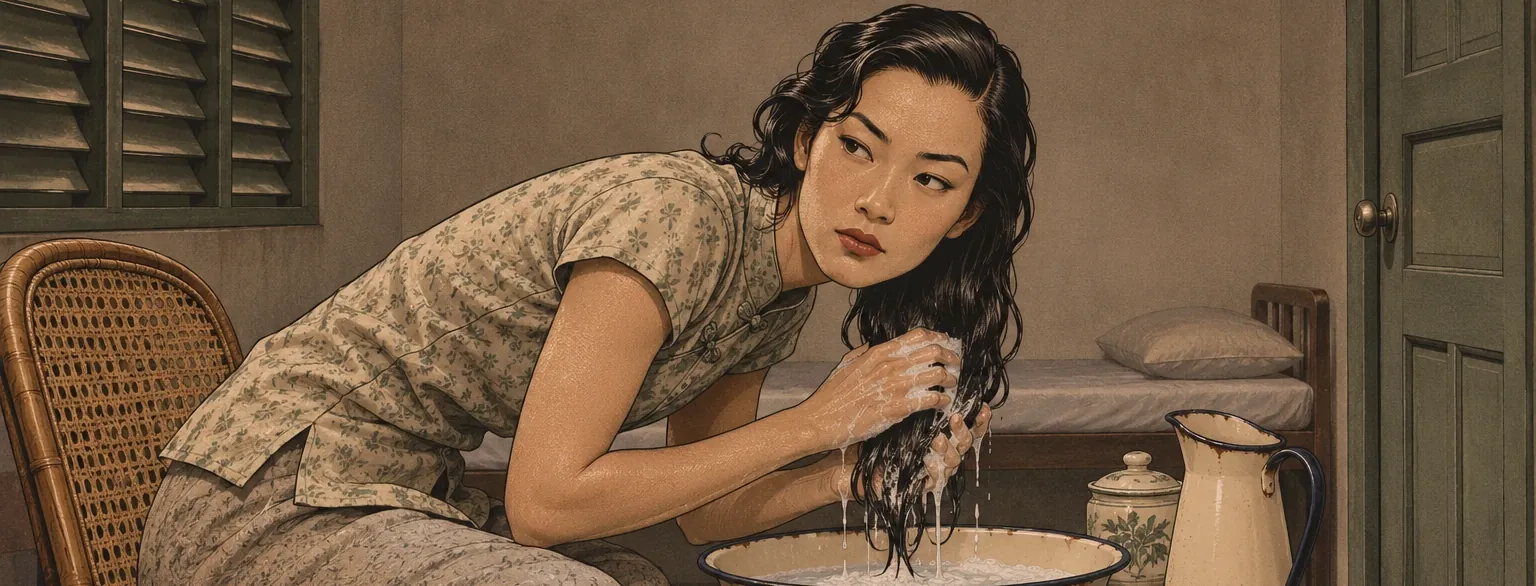
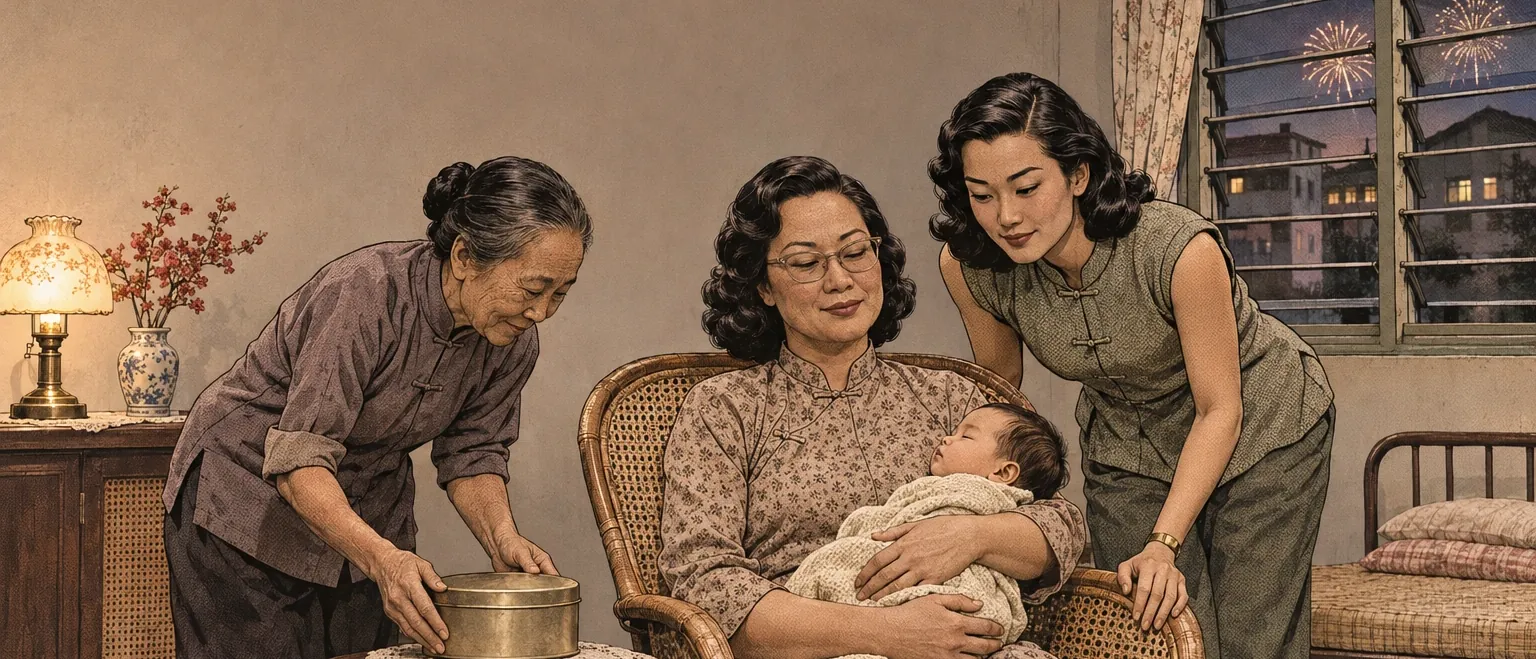
His mother came on the second day with a tiffin carrier of chicken and wine soup and said that a girl first was lucky, an elder sister for the boys to come, which was a kind of blessing and a kind of instruction. Mei Lin drank the soup. She was well. The doctor said so twice, as though it surprised him a little, and sent her home after ten days to sit out the month of confinement in the flat with the windows shut and her hair unwashed, which she bore for twenty-three days and then washed it, and told nobody that either.
The Amah
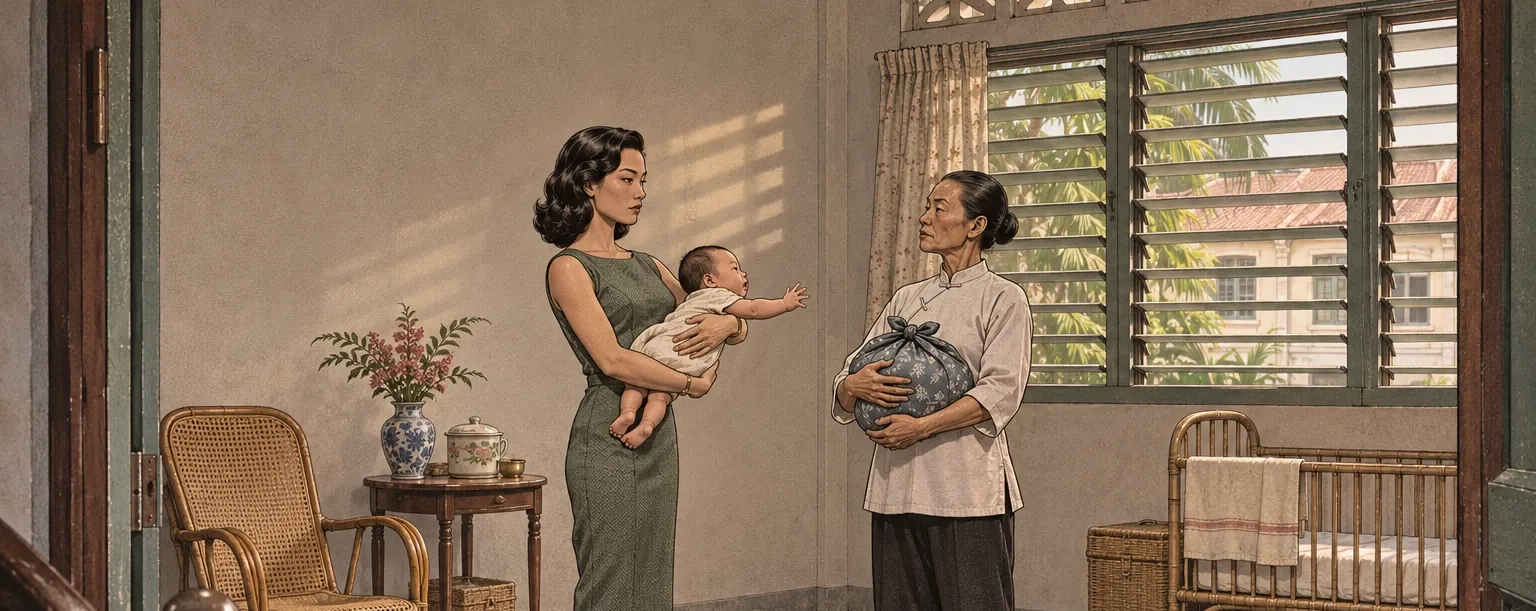
The amah came from an agency in Chinatown with a white tunic, black trousers and a reference from a doctor's family in Tanglin, and she looked round the flat in the way of a woman deciding how long she would stay. Mei Lin paid her more than the agency asked, to settle that.
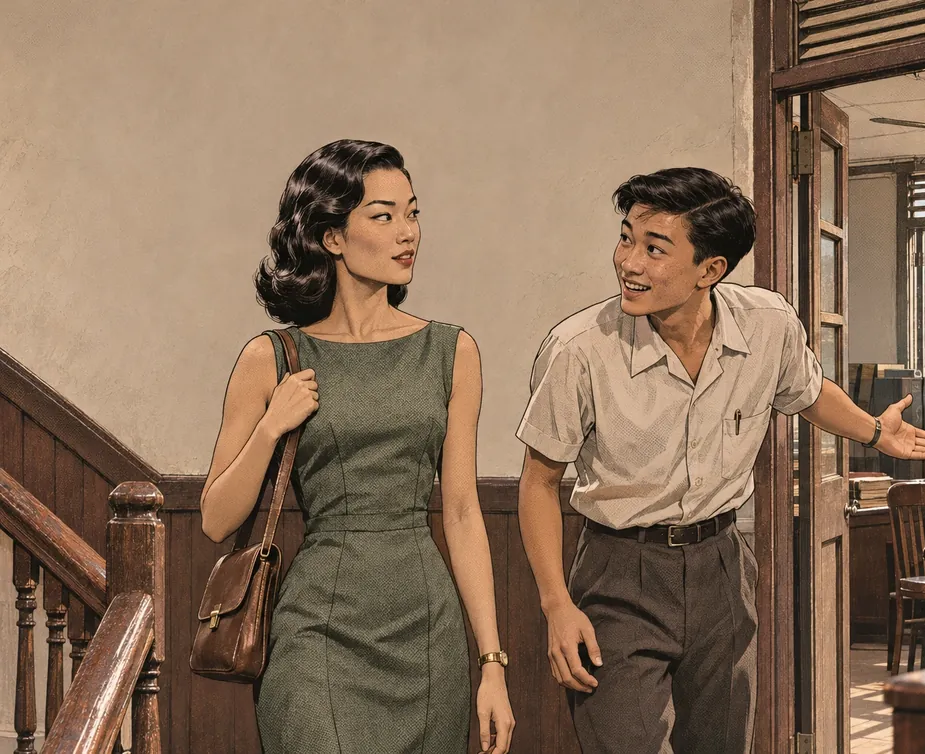
While she had been away the office had been full of talk. A line the agency had carried for years was said to be going to another agent; there would be cuts. When she climbed the stairs again the junior clerk told her, before she had her bag off her shoulder, that the cuts had fallen on the godown side and not on them. He looked as relieved as if he had arranged it.
She brought something back with her. The manager of her old bank, who had once given her a clerk's desk and still sent a card at New Year, had written while she was at home: a Hong Kong trading house wanted an agent for its Singapore cargoes, and he had given them her name. By October their freight was coming through the office every fortnight. Her employer did not give her a new title. He gave her the account, the file and the telephone calls, and told the Hong Kong men that Mrs Teo would see to it, which she did.
Her Mother's Room
Swee Neo's cough went down into her chest that year and stayed there. For weeks she was in bed in the front room upstairs, with the Orchard Road doctor coming every second morning and a nurse at night, and the doctor said a great many careful things without once giving it a name. Cheng Huat stopped asking him for one.
The firm went on without her the way a clock goes on after someone stops winding it. The clerk kept her accounts; nobody won a new one. No customer failed to pay, and the Riau traders still came for their cloth as if there were no Confrontation at all. When stock had to be bought and the bank was slow, her elder brother lent the money again on the same easy terms, and this time Cheng Huat thanked him without minding.
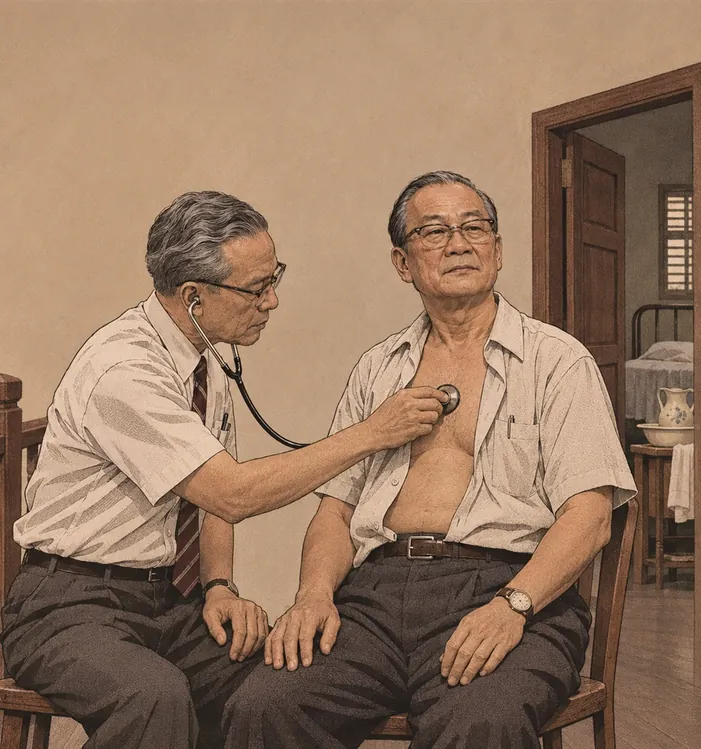
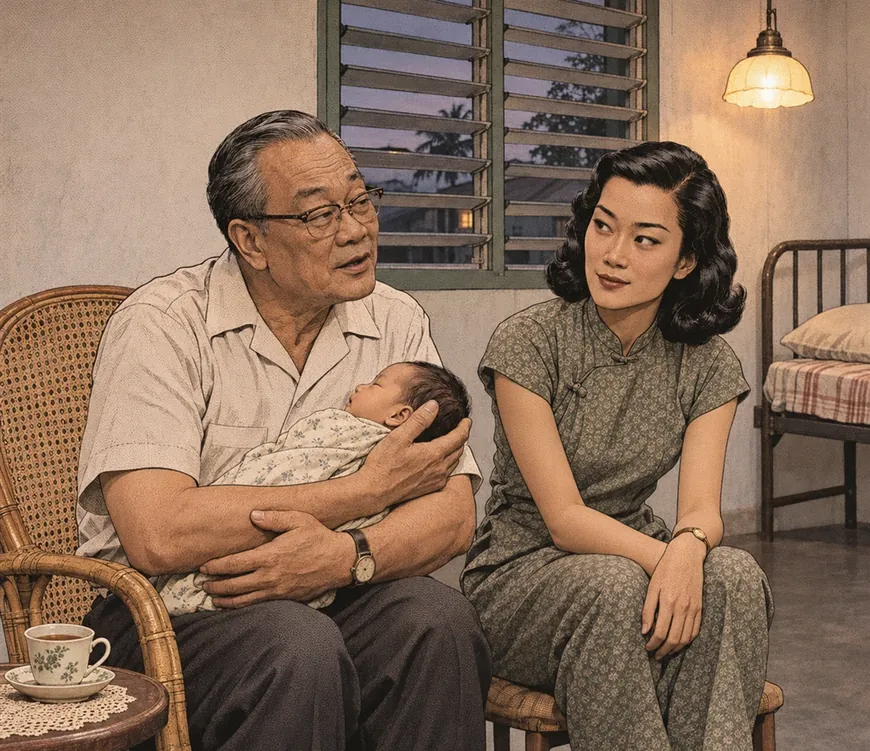
The doctor listened to Cheng Huat's chest too, one morning on the landing, and told him to sleep in the afternoons. He did not. Every evening he took a taxi to Mei Lin's flat instead, so that she need not bring the baby out, and sat on the edge of the cane chair and told her how her mother had eaten, and what the doctor had said, and what he had not said. Then he held Rose for exactly as long as it took to drink one cup of tea, and went home.
The Other Room
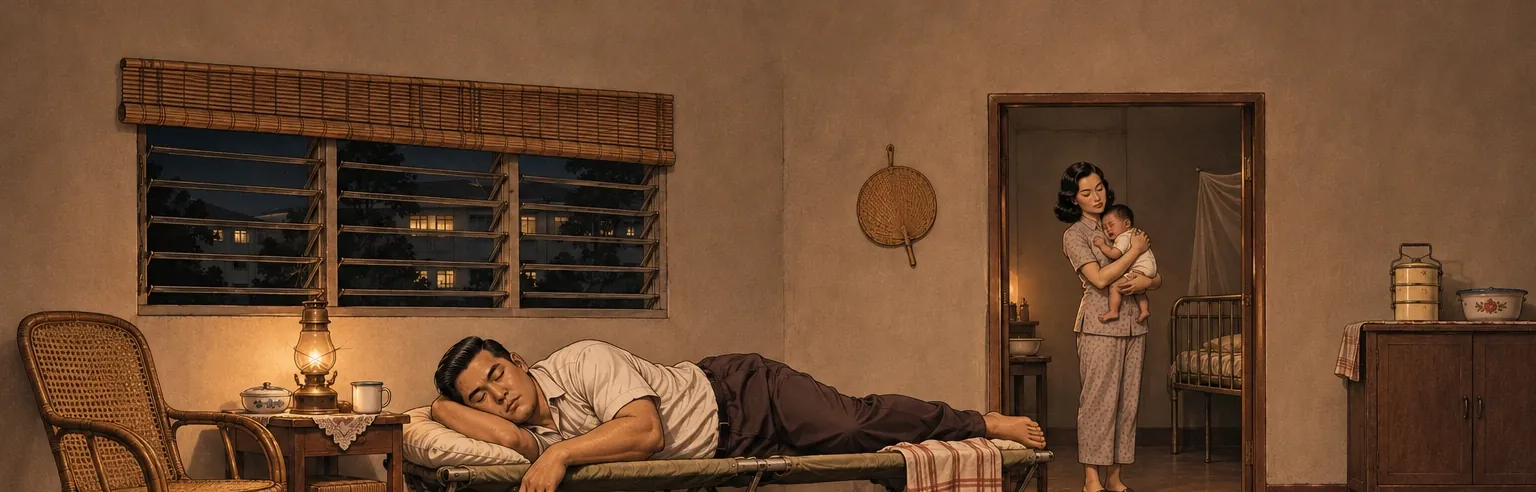
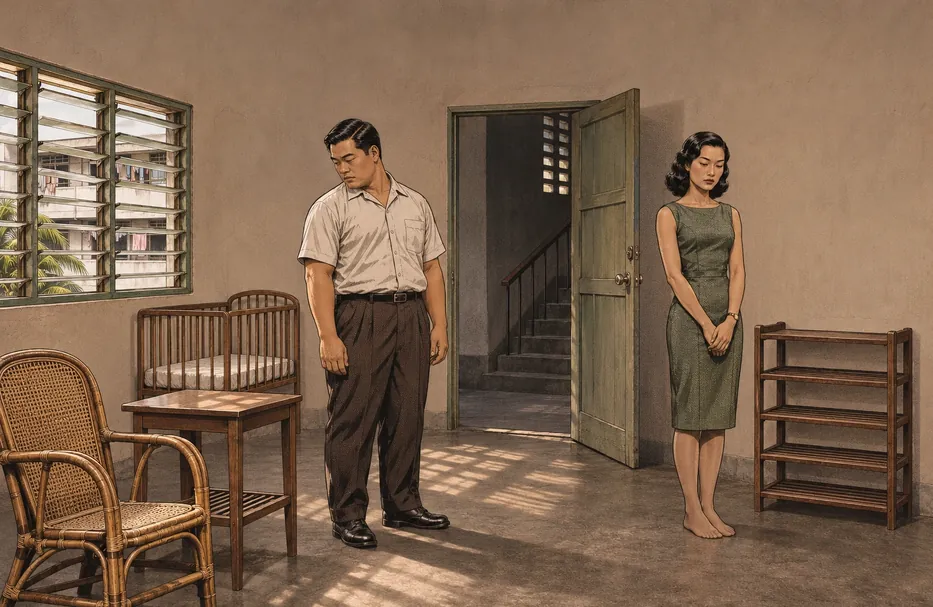
Kah Leong began to sleep in the front room when the baby came, because he had to be at Boat Quay by six and Rose did not care. It was meant for a few weeks. By the time a fever went round the children of the block and Mei Lin kept Rose indoors for a month, he was eating most nights at his parents' house, where his father talked about the dealers he had, and did not offer him the ones he had lost.
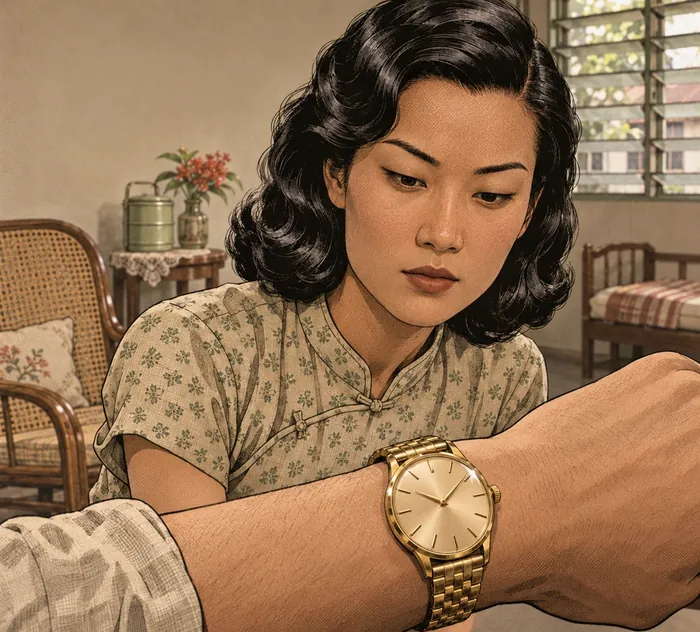
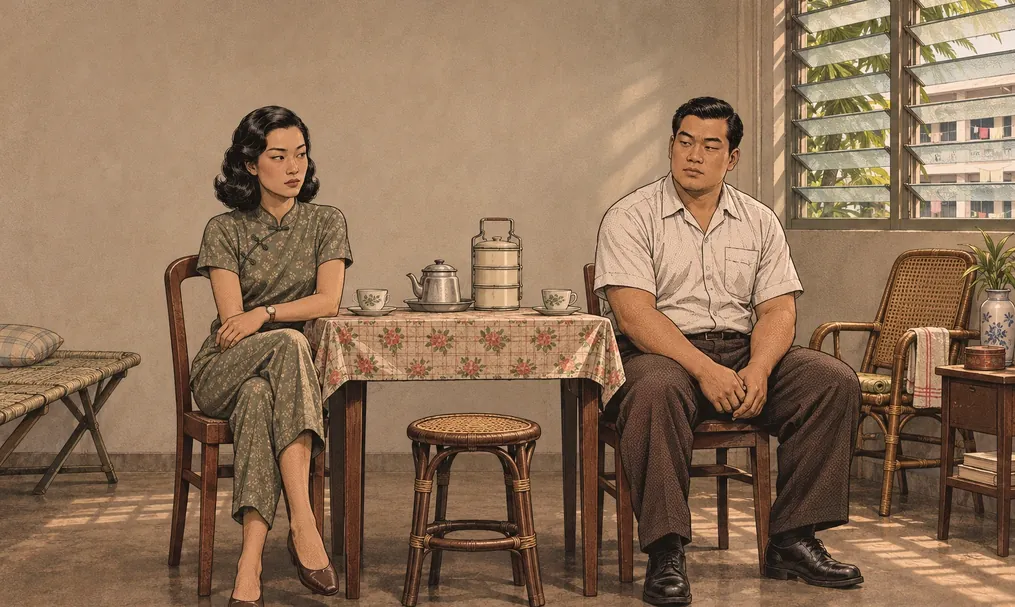
In September someone came through the door the amah had left on the latch while she went down for bread, and took his watch from the side table and a pair of her shoes. He said it was only a watch. He bought another the same week, and she noticed the price, and noticed that none of last year's loan had come back.
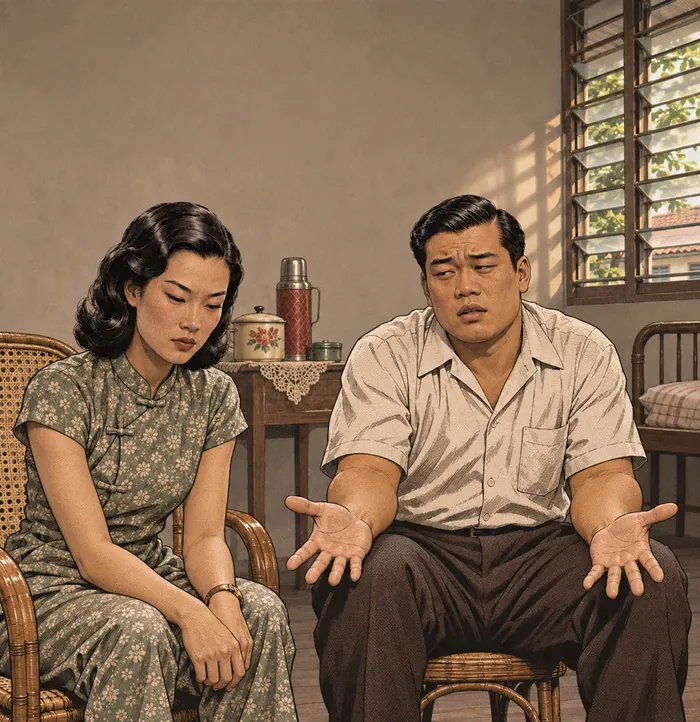
She said it one Sunday, when the amah had the afternoon off. She did not say the money first. She said that they spoke to each other now like people sharing a lift.
"I am working," he said. "So I can pay you back."
"I know."
"Then what?"
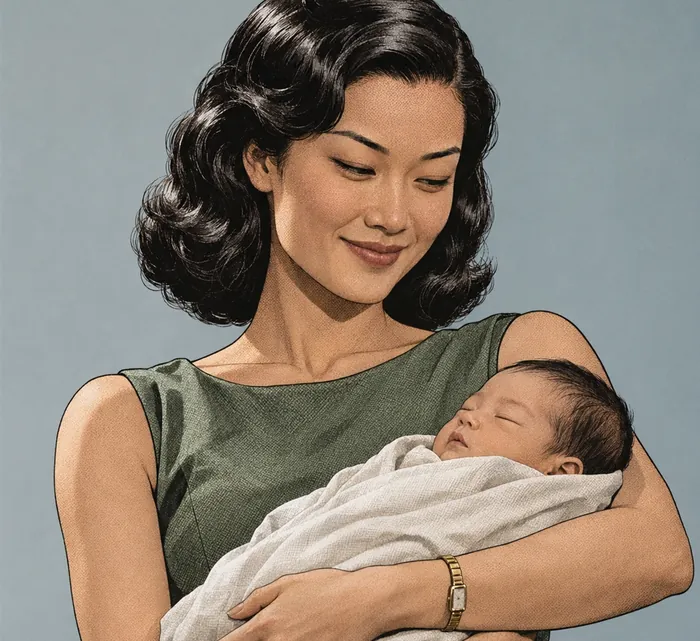
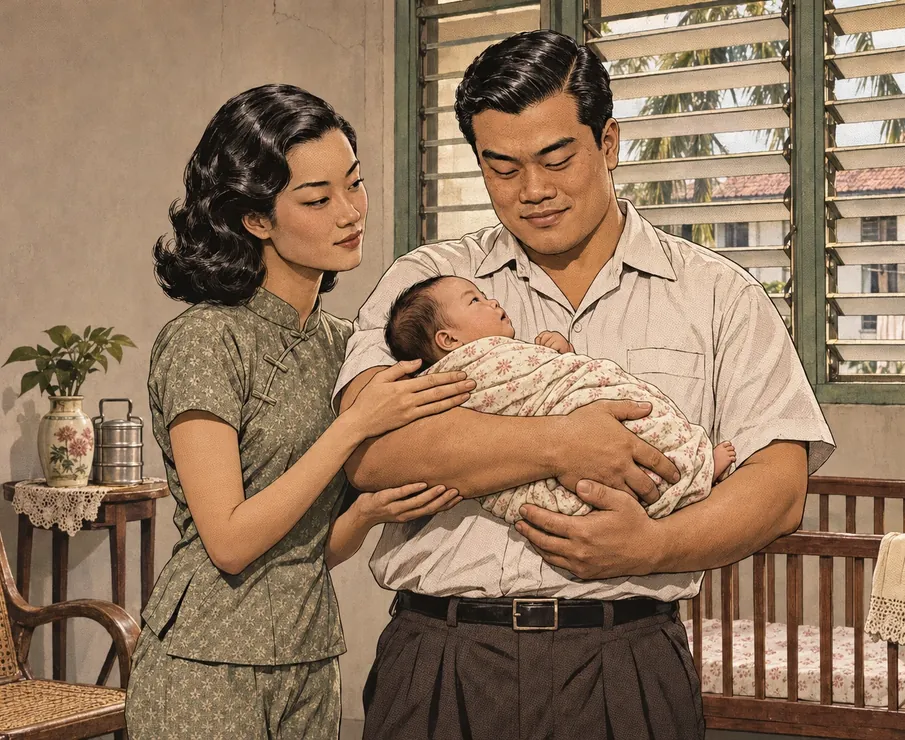
She did not have an answer that would not sound like a complaint, so she gave him the baby to hold instead, and he held her badly and then better. His mother's doctor had given him a tonic for the cough the block's children had passed round; he took it standing at the kitchen window, looking down at the stairwell, where last year's notice had faded to a grey square and nobody had come to say what it meant.
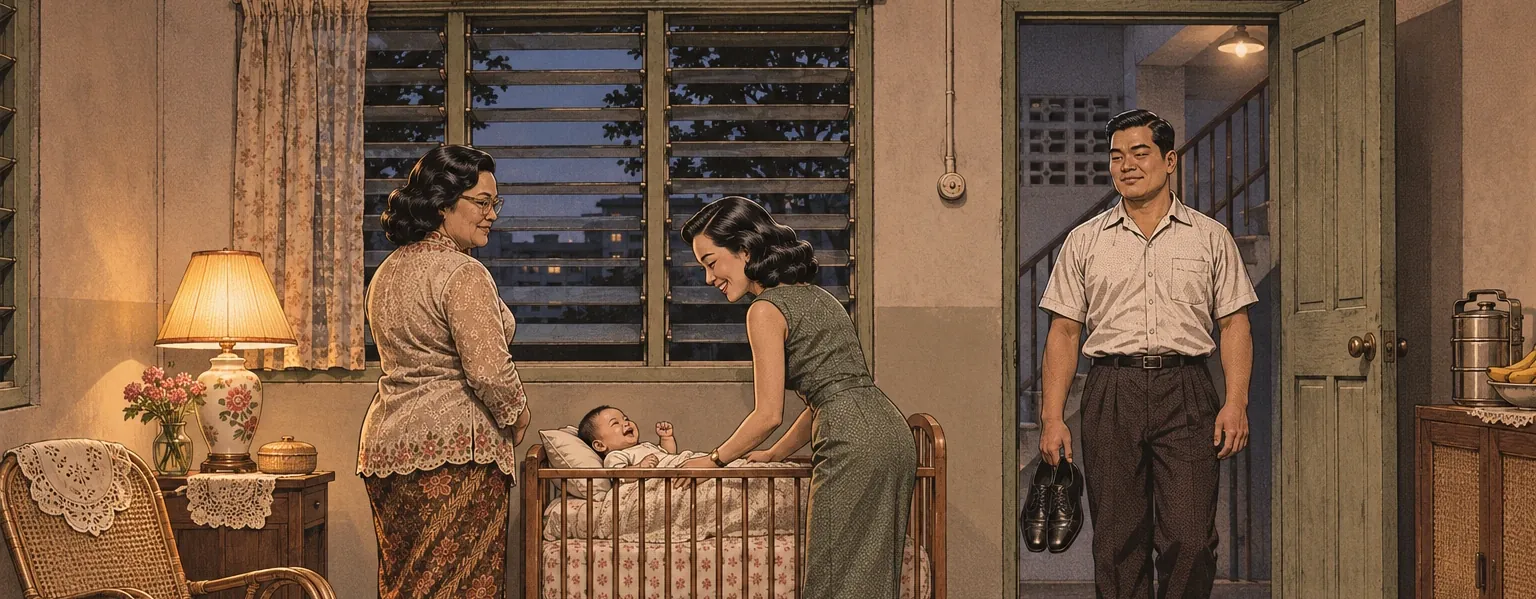
On the last evening of the year Swee Neo came up the stairs for the first time since her illness, slowly, with the old servant behind her carrying a tin of biscuits. She sat in the cane chair and held Rose, and said the child had Cheng Huat's ears, which nobody had noticed before and which everybody, once it was said, could see. Kah Leong came home before eight. He stood in the doorway with his shoes in his hand, looking at the four of them, as if he had walked into the wrong flat and found he liked it.